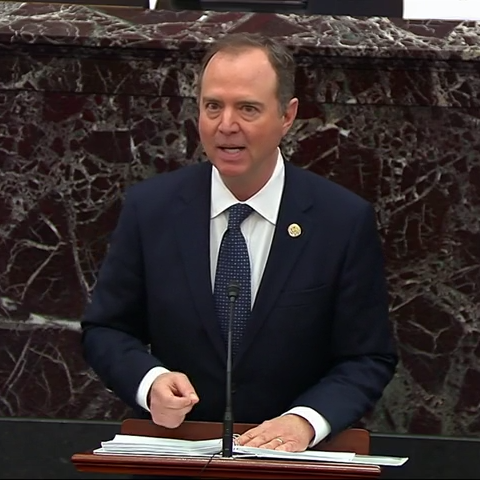
| See Camilla's off-the-cuff reaction when asked if she'll 'miss' Meghan Markle and Prince Harry Posted: 23 Jan 2020 03:10 PM PST  | Want More? We've Got You Covered | | Sign up for our newsletters to get the latest on your favorite celebrities and royals. | | | | | | |  | | Witness to the impeachment Posted: 23 Jan 2020 02:49 PM PST Evening Briefing House managers expanded their case for the removal of President Donald Trump during the second day of his historic impeachment trial. They told the Senate that his decision to block Congressionally approved military aid for Ukraine (for its defense against Russia) and obstruct a probe of his demand that it interfere with the 2020 campaign were clear violations of the Constitution. "No president has ever used his office to compel a foreign nation to help him cheat in our elections," Representative Jerrold Nadler told the Senate. Democrats are hoping that, as they build their case, it will be harder for Republicans to ignore public support for witnesses and evidence. —Josh Petri Bloomberg's Green Daily is where climate science meets the future of energy, technology and finance. Sign up for our daily newsletter to get the smartest takes from our team of 10 climate columnists. Sign up here. Here are today's top storiesTrump is on trial in the Senate, but the Senate is on trial, too. In Bloomberg Opinion, Noah Feldman picks up James Madison's argument that the Supreme Court, rather than the legislative body, should try impeachments. The World Health Organization stopped short of calling the recent coronavirus outbreak a global health emergency. So far, 17 people have died. China has locked down Wuhan, the city of 11 million in which the virus first appeared. The actor Annabella Sciorra testified before a Manhattan jury that Harvey Weinstein acted increasingly menacing towards her, starting with a series of creepy gifts. Banks keep raising the limit on people's credit cards, even if they don't ask. It's been turbocharging profits and leaving customers with the potential to rack up even bigger monthly bills at a time when millions of Americans are already drowning in debt. After years of radical stimulus, bank executives are increasingly calling on central banks to reverse a half decade of negative interest rates. Tesla's legal victory allowing it to sell its electric vehicles in Michigan without using dealers could clear a path for other carmakers. What's Joe Weisenthal thinking about? The Bloomberg news director says the rally in the S&P 500 has been so intense and unrelenting that Tuesday's 0.27% decline felt like a selloff, and yesterday's 0.03% gain felt like a modest decline. Despite two unexpected developments in 2020—Iran tensions and the new respiratory virus—U.S. equities remain within a whisker of their all-time highs. What you'll need to know tomorrow- NYC's popular subway chief abruptly quit after two years on the job.
- Amateur investors are making risky bets that could wipe them out.
- A secretive billionaire bought a $262 million London home.
- Unsold mansions are piling up near Trump's Mar-a-Lago home.
- This is the rainfall map that can tell you if your home is doomed.
- Greta Thunberg addressed Davos. Then she called a climate strike.
- The man billionaires trust to find the perfect, rare classic car.
What you'll want to read in Bloomberg GreenChina is touting its climate credentials as it seeks to clamp down on environmental damage at home while demonstrating a commitment to the international order derided by Trump. Beijing has signed up to the Paris Agreement, spent big on clean energy, announced curbs on single-use plastics and made real progress in tackling air pollution. Yet what has become a key driver of the climate agenda globally—activism as popularized by Thunberg—is all-but taboo in China.  Like Bloomberg's Evening Briefing? Subscribe to Bloomberg.com. You'll get our unmatched global news coverage and two premium daily newsletters, The Bloomberg Open and The Bloomberg Close, and much, much more. See our limited-time introductory offer. Sign up for the Bloomberg Recession Tracker: Bloomberg Economics crunches the numbers every month using our proprietary model to reveal the probability of a downturn over the next year. We'll deliver an updated assessment of all relevant indicators, directly to your inbox. This free newsletter includes analysis showing whether recession risk is increasing or decreasing, with comparisons to the past month's performance as well as previous recessions. Sign up here. Download the Bloomberg app: It's available for iOS and Android. Before it's here, it's on the Bloomberg Terminal. Find out more about how the Terminal delivers information and analysis that financial professionals can't find anywhere else. Learn more. | |   | | U.S. Do’s and Don’ts in Iraq (Knights | Policy Alert) Posted: 23 Jan 2020 02:47 PM PST U.S. DO'S AND DON'TS IN IRAQ by Michael Knights Policy Alert
January 23, 2020 To ensure that new protests, new sanctions, and new political leadership wind up helping rather than hindering Iraqi sovereignty, Washington must handle upcoming developments with great care. READ THIS ITEM ON OUR WEBSITE
In the coming weeks, Iraq’s parliament may appoint a replacement for Prime Minister Adil Abdulmahdi. This is a very positive development, since the country’s sundry Iranian-backed militias would like nothing better than to keep the discredited leader under their thumb as an open-ended caretaker premier following his November resignation. In contrast, a new leader with a new mandate could get the government moving again, pass a budget, bring the criminals responsible for killing protestors to justice, and assuage angry protestors by making visible preparations for early, free, and fair elections—thereby remedying the results of the widely disparaged 2018 vote. Such is the political space that has opened up since the deaths of Iranian Qods Force commander Qasem Soleimani and Iraqi militia chief Abu Mahdi al-Muhandis earlier this month. For the United States, the challenge is how to support these changes without disrupting positive local dynamics. One welcome sign emerged earlier this week, when Shia leader Muqtada al-Sadr and a range of other Iraqi politicians rallied to defend President Barham Salih after Iran-backed militias fiercely criticized him for meeting with President Trump in Davos on January 22. Previously, the militias had warned Salih not to meet with his U.S. counterpart. The militias suffered another setback during a parliamentary vote on January 5, when all Kurdish members, most Sunni members, and even many Shia members boycotted a session intended to ratify a motion evicting U.S. troops from Iraq. As a result, the session was held without a quorum, invalidating the yes votes and showing that militia intimidation was not enough to force dissenting parliamentarians to sabotage their own national interests. These startling developments stem from the ongoing disruption of the Qods Force control system in Iraq. Indeed, the January 3 assassination of Soleimani and Muhandis has created a fleeting opportunity for Iraqi nationalists to seize the political reins back from the militias and restore Iraqi sovereignty. How can Washington support these trends without inadvertently undermining them? Several do’s and don’ts spring to mind: Do postpone further sanctions for a few weeks. The first priority is to avoid interrupting the story. Today’s story in Iraq is a good read: from the protestors up to the president, nationalists are trying to reclaim the right to live in a sovereign, stable, and democratic state. To avoid distracting from this narrative, U.S. officials should hold the release of imminent Global Magnitsky sanctions packages for at least a couple more weeks. They should then signal that Washington is keeping a close eye on individual politicians who are set to be targeted in the new packages, and on some who are close to being sanctioned. Do approve a new energy waiver. The U.S. government should issue a new sanctions waiver for Iraqi purchases of Iranian natural gas and electricity in early February, when the current 120-day waiver expires. Tehran has signaled that it will be reducing these gas supplies from more than 800 million cubic feet per day to just 200 million, citing supply shortfalls and an unusually cold winter in Iran. There is little for Washington to lose in renewing the waiver—the Iranian regime gets little value from these transfers due to U.S. limits on dollar payments, especially now that volumes are decreasing. Issuing the waiver would also prevent Tehran from blaming the United States for any electricity shortfalls in Iraq. Do warn against further crackdowns. Major new protests are expected to unfold on January 24, with some potential for further militia violence against peaceful demonstrators. The United States and other international partners should urgently signal that they will be watching the protests closely and will hold Iraqi officials accountable for harming or intimidating civilians. Don’t overreact to counter-protests. Washington should keep in mind that any major militia in Iraq can bring thousands of people to the streets for a day, and many of them will likely hold marches of their own alongside the peaceful protests scheduled for January 24. This does not mean that they or their usual array of anti-American slogans and symbols represent the majority of Iraq’s 39 million citizens, or even the country’s Shia majority. However many pro-Iranian militia supporters take to the streets, they are just a tiny proportion of all Iraqis. Don’t issue further public threats. On the hot-button issues of sanctions and troop presence, it is time for U.S. messaging to go behind closed doors. Washington has made its views on these two matters clear, so making new threats or other comments in public would not be helpful. At the same time, U.S. officials should take advantage of their many existing channels and quietly communicate to militia leaders that harming Americans or American partners in any way will be met with the same decisive force used against Soleimani and Muhandis—making clear that this retaliation would target Iranian advisors in Iraq and Iraqi militia leaders in equal measure. Do tell Iraqi allies that Washington has their backs. Having refreshed its deterrent posture, the United States should quickly and quietly engage Iraqi nationalists in a manner that makes them feel safe and supported, since they will no doubt continue facing the kinds of threats that President Salih endured ahead of meeting with President Trump. This means explicitly telling key officials such as parliamentary speaker Mohammed al-Halbousi that Washington stands behind them, is watching their efforts closely, and is willing to support and protect them as they try to restart the political process and save their country. Although partners like the UN, EU, and Gulf states can help reinforce these messages, there is no substitute for private messages delivered by top U.S. officials such as Secretary of State Mike Pompeo. Timely, senior-level engagement would leave no doubt that U.S. leaders are focused on the urgent, positive developments currently unfolding in Iraq. Michael Knights is a senior fellow with The Washington Institute. Since 2003, he has conducted extensive on-the-ground research in Iraq alongside security forces and government ministries.
  | | Top Tories dump on possible leadership candidate’s LGBTQ comments Posted: 23 Jan 2020 02:09 PM PST All Carlton Cards and Papyrus stores are closing in Canada | | | | Hi readers! We've put together a 3-minute survey to learn a bit more about our readership, and would really appreciate if you would fill it out. You can find it here. Thank you as always for your support. |
|
|
|
|
|
| | | | | | Richard Décarie, a largely unknown former political aide to Stephen Harper while he was in opposition, is attempting to carve out a niche as the social conservative standard-bearer in the race to replace Andrew Scheer as Tory leader. |
| | Comments "unacceptable," "ignorant" |
|
|
|
|
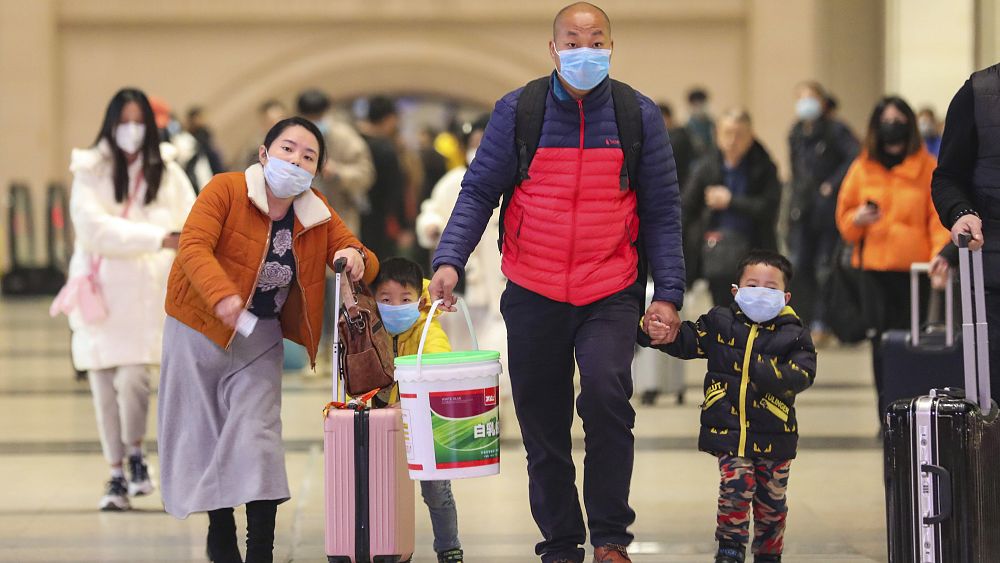
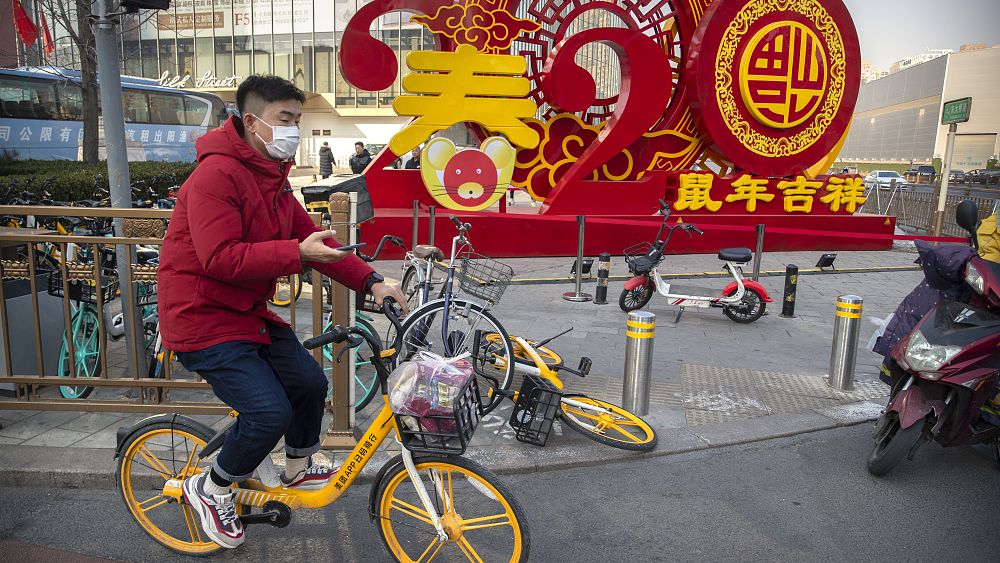
| | | Normally bustling streets, shopping malls, restaurants and other public spaces in Wuhan, a city of 11 million people, were eerily quiet. Train station, airport, ferry, subway and bus services were all halted. |
| | Apparently not tried before |
|
|
|
|
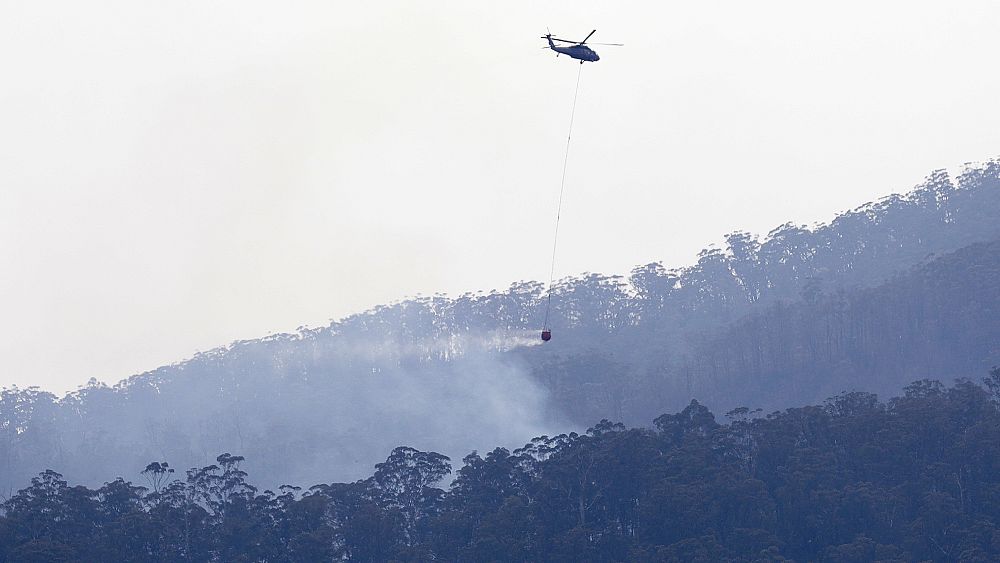
| | | A spokesman for Australia’s Civil Aviation Safety Authority said the aircraft went into a valley to drop the retardant and did not emerge. |
| |
|
|
|
| | New statistics released by the Canada Border Services Agency (CBSA) reveal more information about the frequency of a practice that Privacy Commissioner Daniel Therrien warned is one that could potentially violate individuals’ privacy rights. |
| | A number of complaints filed |
|
|
|
|
| | | | | | | | | | | | | | | 👍 You're all set. Have a great day. |
|
|
|
|
|
| | | | |
|
  | | The Founding Fathers got impeachment wrong Posted: 23 Jan 2020 01:51 PM PST Bloomberg Opinion Today Follow Us   | | This is Bloomberg Opinion Today, a bouillon à la James Madison of Bloomberg Opinion's opinions. Sign up here. Today's Agenda 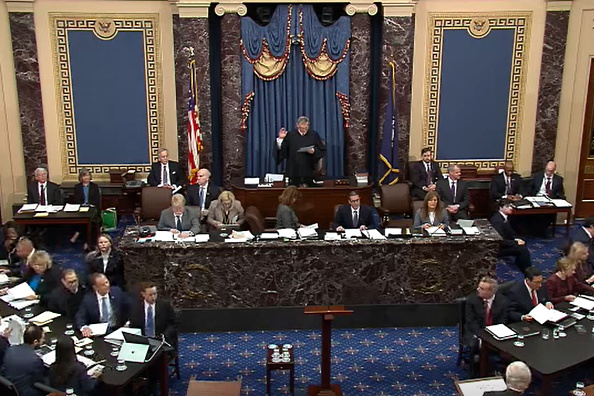 There's got to be a better place/way. Photographer: Handout/Getty Images North America This Is Not What the Founding Fathers Would Have Wanted Faith in the boundless wisdom of the Founding Fathers is almost a religion in America. Like any other false religion, it keeps causing trouble. Take impeachment. It now seems chiseled in stone that the House of Representatives must impeach the president and the Senate must decide whether or not to remove said president. But this procedure was not dictated by the almighty from a mountaintop. It was the end product of a lot of agonizing by the founders, writes Noah Feldman. Many, including James Madison, wanted the Supreme Court to try impeachments. The idea even made it into early drafts of the Constitution. But at some point more founders thought the larger Senate would have greater legitimacy to make such an important decision. Until the trial of President Donald Trump, that seemed like a decent bet. But with Senate Republicans declaring they've already made up their minds and wandering off during opening arguments, it increasingly looks as if the Founding Fathers got this one wrong. The Senate just may not be up to the job. To be fair, a handful of Senate Republicans have shown just enough spine to at least keep Trump and Mitch McConnell from getting everything they want, writes Jonathan Bernstein. Without these few pushing back on McConnell's plans for a swift acquittal, House impeachment managers might not have been able to make their case at all. And it's important that they do, even if they won't change any Republican minds, Jonathan Bernstein writes in a second column. The case against Trump could still have an impact on his approval ratings and re-election chances. More importantly, getting all of this on the historical record matters for the future of the democracy and our ability to keep presidents in check. It's what the founders would have wanted. It Takes a Government to Stop a Pandemic Though the Wuhan coronavirus continues to spread and has now taken 17 lives, the World Health Organization today said it wasn't ready to call it a global emergency. It's still a wake-up call for governments around the world to prepare to fight such outbreaks, which could be far deadlier in the future. Of course, that's easier said than done. For example, Wuhan's relatively young population makes it an unlikely epidemic source, Shuli Ren notes. But local officials also haven't spent nearly enough on public health, contributing to unsanitary conditions at the city's "wet markets," where live animals are sold and slaughtered. Contrary to popular belief, China doesn't have an endless supply of cash and has already dedicated a lot of it to trying to catch up to the West in technological prowess. Wet markets are dwindling in number in China, while intensive factory-like farming is on the rise, writes David Fickling. This transition period is when a lot of exotic diseases will get plenty of chances to jump from animals to humans. And getting farmers to live by stricter sanitation guidelines isn't easy when trust in government is low. Meanwhile, Big Pharma could be coming up with vaccines to fight these diseases, not to mention new antibiotics to counter the terrifying rise of drug-resistant bacteria. But such endeavors are not ludicrously profitable, notes Max Nisen, so Big Pharma's just not into it. Governments may have to make the difficult choice to shovel more cash at unpopular drug companies just to get them to lend a hand saving lives. Private Equity Strips Fairway Clean, Leaves it For Dead There used to be this amazing little grocery chain called Fairway Market, a beloved New York City institution known for fresh produce, low prices and mind-boggling selections. Open since 1933, it made more than enough money to keep going indefinitely. But then in 2007 it needed to cash out some partners, and the remaining partner wanted to expand. So he turned to private equity — thus signing Fairway Market's death warrant, as Joe Nocera writes in painful detail. The new owners had little experience in the grocery business and expanded too quickly, while loading the chain up with debt and giving themselves exorbitant paydays. This week it filed for Chapter 11 bankruptcy protection. A handful of stores may survive in the hands of a different family, but this is another reminder that private equity looks out for only itself. Telltale Charts The tax cuts aren't the only thing driving the deficit higher, writes Justin Fox. Spending has more than done its share. 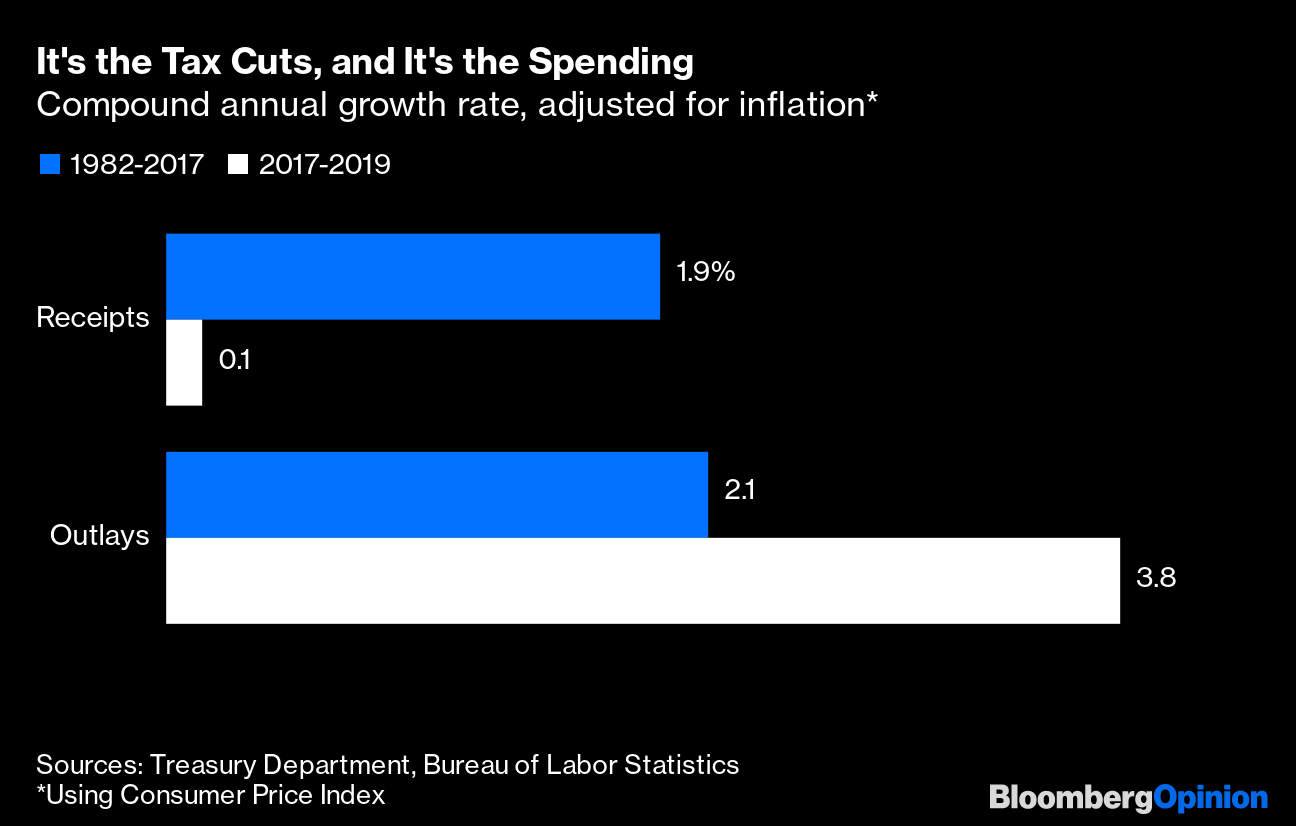 Oil prices are going nowhere despite tensions in the Gulf, a sign the oil industry needs to keep tightening its belt, writes Liam Denning. 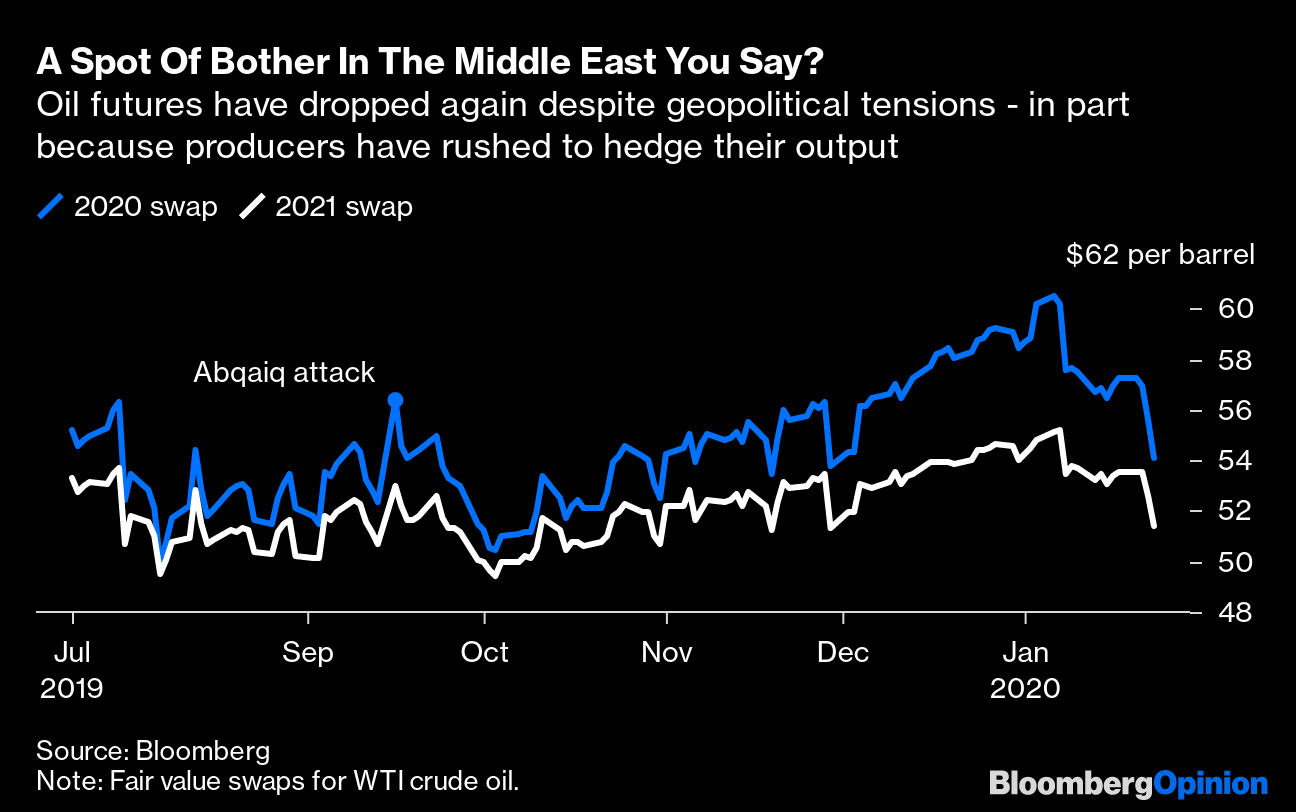 Further Reading Comcast Corp.'s shrinking cable subscriber base is a warning for AT&T Inc. — Tara Lachapelle The Fed's repo-market fix is only temporarily papering over the problem. — James Bianco Banks are burning cash on technology without understanding its effectiveness. — Elisa Martinuzzi The bond market is out of control, 3.375% CoCo bond edition. — Marcus Ashworth We've just got to convince Saudi Arabia to focus its spying capabilities on enemies, not newspaper owners. — Eli Lake Congress is long overdue to take back some power to wage war. — Hal Brands America's immigration system is far more selective than you hear. — Noah Smith ICYMI Banks are boosting credit limits without asking customers. New York's subway chief resigned. This map can tell your home's flooding risk. Kickers The Vesuvius eruption turned one man's brain to glass. (h/t Scott Kominers) Procrastination is a problem of managing emotions, not time. Why some doctors purposely misdiagnose patients. We have forgotten the power of reading out loud. Note: Please send diagnoses and complaints to Mark Gongloff at mgongloff1@bloomberg.net. Sign up here and follow us on Twitter and Facebook. | | | | Before it's here, it's on the Bloomberg Terminal. Find out more about how the Terminal delivers information and analysis that financial professionals can't find anywhere else. Learn more. | | | |   | | alobor.com :اسبوعية وطنية مستقلة تصدر من الصحراء Posted: 23 Jan 2020 12:46 PM PST
| Destinasi Wisata Bali Yang Murah Melainkan Unik Posted: 23 Jan 2020 04:14 AM PST Destinasi Liburan Bali Yang Murah Tapi Unik Kebanyakan orang acap kali berpikir bahwa berkunjung ke Bali akan memakan biaya yang benar-benar besar. Meskipun sesungguhnya daerah liburan di Bali cuma memungut tarif murah untuk pelancong, terutamanya pelancong lokal. Ada banyak destinasi tamasya bali yang murah yang dapat dikunjungi. Beberapa tempat wisata murah namun indah dan unik yang seharusnya Anda coba dikala ke Bali yakni sebagai berikut: Pasih Uwug Pasih Uwug yaitu salah satu destinasi tamasya bali yang murah yang sangat tenar tapi jarang dikunjungi. Meskipun Pasih uwug ini adalah tempat yang benar-benar unik dengan estetika eksotis yang tak ada duanya. Pasih uwug adalah pantai yang bisa Anda nikmati dari atas tebing. Pas di pantai ini dulunya ada sebuah gua yang sudah hancur sebab air laut. Sisa-sisa gua hal yang demikian membentuk sebuah lubang yang terlihat seperti jembatan yang menghubungkan tebing yang satu dengan yang lain. Tidak jauh dari situ juga terdapat lubang dengan air yang yaitu salah satu sisa peninggalan gua. Pemandangan di Pasih uwug tak akan Anda peroleh di daerah lain. Tidak heran seandainya pantai ini menjadi destinasi liburan yang murah sekaligus unik. 
2.Angel's Bilabong Satu lagi destinasi tamasya bali yang murah yang sangat terkanal tetapi jarang dikunjungi oleh wisatawan lokal. Kebanyakan yang mengunjungi daerah ini justru pelancong asing. Angel's Bilabong adalah pantai yang berada diantara dua batu karang. Lokasinya yang diapit karang membuat air di pantai ini nampak seperti kolam. Apalagi dasarnya juga adalah batu karang sehingga kian terlihat seperti sebuah kolam. Anda dapat berenang dengan bebas tanpa takut terseret arus karena airnya betul-betul tenang, ombak yang datang telah dipecah oleh dua batu karang di sekitarnya. Anda juga tida dipungut biaya mahal untuk datang ke pantai ini, Pura Taman Saraswati Pura Taman Saraswati adalah destinasi liburan bali yang murah yang awam disebut juga dengan pura air. Pura ini berada di sekeliling kolam yang dipenuhi dengan teratatai. Jadi ketika teratai hal yang demikian berbunga, keindahannya akan semakin nampak. Destinasi ini amat terkenal diantara turis karena nuansa estetika yang unik dan berbeda dari pura lainnya. Anda dapat menikmati ketenangan saat berkunjung ke pura ini. Apalagi jika Anda datang pada sore hari sehingga udaranya terasa kian teduh dengan pemandangan yang cantik. Jangan hingga Anda melewatkan pura unik ini ketika pergi ke Bali. Anda hanya dipungut biaya masuk saja dan sama sekali tak mahal. 
Virgin Beach Seperti yang sudah dikenal banyak orang, selain memiliki pantai yang familiar, Bali juga memiliki banyak sekali virgin beach atau pantai perawan yang masih jarang dikunjungi. Pantai seperti ini merupakan destinasi wisata bali yang murah sebab kebanyakan tak dipungut biaya masuk. Mendatangi pantai yang masih sepi memberikan sensasi yang sangat unik. Bayangkan saja satu pantai yang luas hanya ada Anda sendiri bebas melaksanakan apa saja. Apalagi pantai yang belum terjamah ini umumnya mempunyai estetika luar awam yang belum banyak dikenal orang. Anda seperti menerima harta karun. Ada banyak virgin beach di Bali, Anda tinggal pilih berharap datang ke pantai mana. Jadi liburan ke Bali tak mesti mahal, justru ada banyak yang bisa Anda kunjungi dengan murah. Cobalah salah satu tempat liburan tersebut, tidak keok menarik dengan wisata lainnya. Sekiranya ada yang murah, untuk apa membayar mahal. Jangan lupa menerapkan jasa rental mobil murah di bali untuk lebih hemat pengeluaran anda. The post Destinasi Wisata Bali Yang Murah Melainkan Unik appeared first on Alobor.  |  | | Former Bachelorette contestant Tyler G. dead at 29 sfter suspected overdose Posted: 23 Jan 2020 12:27 PM PST | If you are having trouble viewing this email click here |  | | 1/23/20 |  | | | |  | | | SHOCKING DEATH
Former Bachelorette Contestant Tyler Gwozdz Dead at 29 After Suspected Overdose | | | | Police told PEOPLE they "responded to a medical overdose" involving Tyler Gwozdz on Jan. 13 | | | | |  | | | STAR TRACKS
Jada Pinkett Smith Makes Moves in Miami, Plus Joe Jonas & Sophie Turner, Ciara and More | | | | From Hollywood to New York and everywhere in between, see what your favorite stars are up to | | | | | | | | |  | | | ETIQUETTE LESSON
Who Do Prince Harry and Meghan Markle Have to Bow and Curtsy to If They Stop Using Their HRH Titles? | | | | Myka Meier, a royal etiquette expert, tells PEOPLE that Meghan Markle and Prince Harry's royal exit has made things 'murky' | | | | | | | | |  | | | UPDATE
Tori Roloff Confirms Daughter Lilah Is a Little Person, Explains C-Section Was Due to 'Dwarfism' | | | | Tori Roloff and husband Zach Roloff welcomed their second child, daughter Lilah Ray, in November | | | | |  | | | CRIME NEWS
Michelle Carter Released from Prison After Manslaughter Conviction in Infamous Suicide-by-Text Case | | | | "Good time" credit earned behind bars allowed Michelle Carter to shorten her prison stint by more than three months | | | | |  | | | EXCLUSIVE
Jessica Simpson Decided to Quit Drinking After Realizing She Couldn't Dress Her Kids for Halloween | | | | "It was a long, hard emotional journey," Jessica Simpson writes about how she has quietly reclaimed her life and her health over the past year | | | | |  | | | COURTS & TRIALS
Annabella Sciorra Testifies That Harvey Weinstein Raped Her: 'It Was So Disgusting' | | | | The Sopranos actress detailed the night that Harvey Weinstein allegedly raped her at her Manhattan apartment | | | | CLICK HERE FOR MORE NEWS | | | | | | | | | | Meredith Corporation, 1716 Locust Street, Des Moines, IA 50309
PEOPLE may receive compensation for some links to products and services in this email. Offers may be subject to change without notice.
Copyright © 2020 MEREDITH CORPORATION. All rights reserved. Reproduction in whole or in part without permission is prohibited.
| | |  | | Can Hi-Tech Transform the U.S.-Israel Relationship? (Decision Points | Episode 10) Posted: 23 Jan 2020 11:47 AM PST CAN HI-TECH TRANSFORM THE U.S.-ISRAEL RELATIONSHIP? Featuring David Makovsky, Dan Shapiro, and Dan Senor Decision Points, Episode 10
January 22, 2020 LISTEN TO THIS EPISODE
This episode discusses the growth of Israel’s hi-tech sector and its impact on relations with the United States. Much of the state’s technological innovation has stemmed from its unique history, geography, and culture, proving that necessity truly is the mother of invention. Today, technology plays a key role in the bilateral relationship, including strong ties between military research institutes in both countries, multiple congressional allocations of hi-tech military hardware in times of war, joint technology projects outside the defense sector, and the growing presence of American technology companies such as Intel, Google, Microsoft, IBM, and HP. Dan Shapiro and Dan Senor join host David Makovsky to discuss the role that hi-tech has played in the relationship. Shapiro served as the U.S. ambassador to Israel from July 2011 to January 2017 and is currently a visiting fellow at the Institute for National Security Studies in Tel Aviv. Senor is the coauthor of the bestseller Start-Up Nation: The Story of Israel’s Economic Miracle (with Saul Singer) and a leading expert on the country’s hi-tech and business sectors.
  | | Iranian Succession and Soleimani’s Death (Khalaji | PolicyWatch 3247) Posted: 23 Jan 2020 10:48 AM PST IRANIAN SUCCESSION AND THE IMPACT OF SOLEIMANI'S DEATH by Mehdi Khalaji PolicyWatch 3247
January 23, 2020 The general's peerless domestic stature would have served a crucial mediatory role during the eventual transition to Khamenei's successor, so his death brings significant uncertainty to that process. READ THIS ITEM ON OUR WEBSITE
Following the assassination of Qasem Soleimani, much attention has been focused on the foreign operations conducted by the Islamic Revolutionary Guards Corps-Qods Force. Yet his organization also played a major role at home, one whose future is now unclear. In particular, Soleimani himself was well positioned to be a unifying, steadying figure once Iran faced the challenge of determining a successor to Supreme Leader Ali Khamenei. SOLEIMANI AS KHAMENEI’S PERFECT SOLDIER In the Supreme Leader’s eyes, Soleimani was the epitome of how a military commander should conduct himself professionally and politically. No other senior commander was as trusted by Khamenei—a fact that was evident in the preferential treatment often accorded to him. For instance, when Khamenei took office in 1989, he introduced a new policy of limiting the terms of service for military and political positions, including the top post at the IRGC, which was capped at ten years. Khamenei was not considered a natural successor to Ruhollah Khomeini and lacked the founding leader’s religious credentials and charisma, so carefully reshuffling the military hierarchy now and then was an alternative way of establishing and consolidating his power. Even today, when his authority is nearly absolute, rotating senior and middle-ranking staff helps him prevent commanders from forming their own power circles and alliances. Yet Soleimani was an exception to these terms limits, in part because he hailed from a small group of IRGC commanders who were close to Khamenei rather than his rivals during the transition from Ayatollah Khomeini. Once the general was appointed as commander of the Qods Force in 1997, he remained in that position until his death more than twenty years later. Soleimani did not achieve this special status just because of his early loyalty and subsequent military achievements. Unlike the overwhelming majority of IRGC officers, he also avoided any involvement in economic and political activities, instead living a purely pious personal life. These traits endeared him to Khamenei, who often pointed to the general and his Qods Force as proof that a “resistance” strategy worked better than the diplomatic approach favored by Iranian presidents. Soleimani was unique in carrying out that strategy without making public statements in support of hardline policies or against dissenting officials, even during heated election cycles. He was impenetrable by influential power centers—he received orders directly from the Supreme Leader and was accountable only to him, so the general could not care less about what presidents or other officials wanted. The only person to whom he proudly and repeatedly expressed his blind devotion was Khamenei. In return, the Supreme Leader often described Soleimani’s character and service with epithets that have not been used for any other commander. This mutual favoritism was also illustrated by the manner in which they conducted regional policy. In early 2019, for example, Qods Force personnel escorted Syrian president Bashar al-Assad from Damascus to Khamenei’s office in Tehran without the government’s advance knowledge. Foreign Minister Mohammad Javad Zarif reacted angrily to being excluded from the meeting and offered his resignation, but was ignored. Even President Hassan Rouhani was excluded from portions of the meeting—in contrast, Soleimani and his associates sat next to Khamenei throughout the entire session, with the Supreme Leader and Assad praising him in the warmest terms. In addition, thanks to state propaganda and Western media coverage, Soleimani was perceived as a hero by a great portion of Iranian society, though he explicitly cast himself not as a nationalist figure, but rather as a soldier in the service of Islam and the regime. The “national hero” label often bestowed on him is a rare epithet in Farsi, reserved for characters in Persian epics and mythology rather than modern military figures. In that sense, Soleimani became almost as ideologically sacred as Khamenei himself. Publicly criticizing his record or role was not permitted, and the regime elite tended to speak of him respectfully, even affectionately, regardless of their factional affiliations. In their eyes, he had the traits necessary to facilitate decisionmaking and build consensus in a time of crisis—an unmatched personality whose authority and wisdom would be unquestionably accepted by his military peers, the political elite, and a large portion of the population. This reputation was further solidified in recent years whenever the Qods Force was tasked with playing a greater domestic role. For instance, after the government’s incompetent response to last year’s flooding crisis, Soleimani’s troops stepped in to provide relief. Given his portrayal of the force as a national body with multiple military and nonmilitary mandates, it will be interesting to see whether and how the new leadership feels compelled to reposition the organization. Incoming deputy chief Mohammad Hossein-Zadeh Hejazi exemplifies this dilemma. Prior to joining the Qods Force, he was instrumental in molding the Basij militia into the repressive force that brutally put down the 2009 Green Movement protests. Although he has held foreign roles since then, his overall background is very much focused on internal security. The Qods Force has largely stayed out of the regime’s efforts to crack down on more recent unrest in Iran, such as the killing of hundreds for protesting gasoline price hikes. As a result, it has received little blame for such suppression, but that could change. SUCCESSION NEEDS A STEADYING HAND The eighty-eight ayatollahs who make up Iran’s Assembly of Experts are constitutionally charged with appointing the Supreme Leader’s successor, but the institution is well-known for its dependence on outside players, particularly the IRGC. Members usually win election to the assembly with direct support and funding from IRGC elements, and their ties to the military-security apparatus are much stronger than their roots in the clerical establishment. Therefore, the real decision about Khamenei’s eventual successor will need to be made outside the assembly. Soleimani’s death makes this situation more problematic because Khamenei has steadily replaced allegiance to regime ideology with a cult of personality over the years. If he were to leave the scene anytime soon, the highly factionalized elite—including the IRGC—would have no pivotal authority on which to build a new foundation for internal unity and domestic legitimacy, thus creating an existential risk for the regime as a whole. The irony is that Khamenei is a “man of institutions” who firmly believes in limitless, modernized bureaucratization in order to undercut the role of individual actors. Yet his emphasis on fostering an abundance of institutions is not intended to empower the government’s democratic structures, but rather to weaken the potential for independent alliances and strong democratic institutions. Today, it is common for Iranian institutions to be assigned overlapping missions with no options for coordinating with each other or seeing themselves as accountable to any authority other than the Supreme Leader. This design helps Khamenei insulate his power against domestic threats, whether from the elite or the people, allowing him to enjoy maximum authority—but with minimum responsibility when things go wrong. The danger of concentrating so much power in Khamenei’s hands is obvious: what happens when he is gone? Soleimani was an unparalleled alternative authority, someone who likely gave Khamenei peace of mind that the regime could remain stable when the time for transition came around. Even authoritarian regimes benefit from having such safety valves—figures who can offer guidance during times of crisis and expect it to be followed without resorting to coercive measures. Now the prospect of succession likely seems more unnerving to Tehran, and the regime’s future less certain. Mehdi Khalaji is the Libitzky Family Fellow at The Washington Institute.
  | | News Alert: Trump is preparing to release his long-awaited Middle East peace plan, will brief Israel's Netanyahu in Washington, Pence says Posted: 23 Jan 2020 10:30 AM PST The Israeli-Palestinian plan could be unveiled before Israeli elections in March, without input from Palestinians. The White House also plans to brief Israeli opposition leader Benny Gantz.                      | | Black coaches are losing patience with the NFL’s hiring process. Posted: 23 Jan 2020 10:12 AM PST | "You know you have no shot." | | |  | | | | By Robert Klemko | As word of each NFL head-coaching hire landed this week, a sprawling network of black coaches and their advocates traded messages bemoaning what they saw as the latest in a long string of insults to their fraternity. One coach summed it up in a text to his agent: "I'm sad for all of us." Four of the league's five coaching vacancies have been filled: Joe Judge, in New York to the Giants; Mike McCarthy, in Dallas; Matt Rhule, in Carolina; and Ron Rivera, in Washington. The reported front-runners for the fifth opening, in Cleveland, are both white. If the Browns job goes to one of them, it would leave the NFL, in which roughly 70 percent of the players are black, with just three black head coaches. That's as many as there were in 2003, when the NFL instituted the Rooney Rule, requiring teams to interview at least one minority candidate when they had a vacancy. | | | | Uncover more | | | | | | Cancel anytime. | | | | | | | | |  | | Most Social: Tulsi Gabbard sues Hillary Clinton over Russia comment Posted: 23 Jan 2020 10:01 AM PST | Tulsi Gabbard claims Hillary Clinton's Russia comments were "retribution" for her endorsing Bernie Sanders over Clinton in the 2016 election. | |    | | BREAKING NEWS: Democrats to hammer constitutional case for Trump’s removal Posted: 23 Jan 2020 10:00 AM PST House impeachment managers are poised to argue that the Constitution demands President Donald Trump's ouster from the presidency because of his alleged abuse of power in the Ukraine saga. Watch the trial live. Follow our real-time breakdown of today's key moments. Trump's lawyers are also on trial. To change your alert settings, please go to https://secure.politico.com/newsletter-settings

This email was sent to kamal.sahim5.news@blogger.com by: POLITICO, LLC 1000 Wilson Blvd. Arlington, VA, 22209, USA  Please click here and follow the steps to unsubscribe.
 | | ما هو "الفيروس الغامض" الذي أثار قلق مسؤولي الصحة في أوروبا؟ Posted: 23 Jan 2020 07:58 AM PST منظمة الصحة العالمية بدأت تنسّق الجهود للحيولة دون انتشار هذا الوباء في جميع أنحاء العالم تجنباً... | نسخة على الإنترنت | | نسختك الخاصة من أخبار يورونيوز – 01/23/20 |
|
| نشرتك اليومية من الأخبار المختلفة المتنوعة |
|
| يورونيوز، كل الحقوق محفوظة، Euronews SA, 56 quai Rambaud, 69002 Lyon, France |
|
| هذه الرسالة تصلك لأنك قمت بالتسجيل والاشتراك في النشرة الإخبارية ليورونيوز، إن لم ترغب في استلامها، يمكنك إلغاء الاشتراك بالنقر هنا |
|
| وفقا للقانون الفرنسي المتعلق بتكنولوجيا المعلومات وملف البيانات والحريات المدنية في 6 يناير 1978، لك الحق في أي وقت أن تدخل، تصادق، أو تحذف معلومات خاصة بك، يمكنك من خلال « الكتابة إلينا في قسم "contact" أو الاتصال ». |
|
|
|
 | | Watch Live: The New Status Quo in Northeast Syria-Humanitarian and Security Implications Posted: 23 Jan 2020 07:32 AM PST | | | | Watch Live Today at 12:30 PM (ET) | |
|
| | THE NEW STATUS QUO IN NORTHEAST SYRIA: HUMANITARIAN AND SECURITY IMPLICATIONS FEATURING Gonul Tol, Wladimir van Wilgenburg, and Dana Stroul THURSDAY, JANUARY 23, 2020
Live event broadcast on our website
Estimated time 12:30 PM - 2:00 PM (ET) | |
| |
| | | | | President Trump's announcement of a U.S. withdrawal from northeast Syria, followed swiftly by the Turkish military incursion, raised urgent questions about influence and control in that critical region. While a slimmed-down U.S. contingent remains in the area, a new status quo has emerged that includes a greater role for Russia and the Assad regime and a more circumscribed role for America's local partners, the Kurdish-led Syrian Democratic Forces. How will this shifting balance of power affect counterterrorism efforts, humanitarian conditions, governance, and the political/military stature of various local and international actors, including the United States? To address these questions, The Washington Institute is pleased to host a Policy Forum with Gonul Tol, Wladimir van Wilgenburg, and Dana Stroul.
Gonul Tol is founding director of the Middle East Institute's Turkish Studies Program and an adjunct professor at George Washington University's Institute for Middle East Studies. She has written extensively on U.S.-Turkish relations, Turkish domestic politics, and the Kurdish issue.
Wladimir van Wilgenburg is coauthor of the 2019 book The Kurds of Northern Syria: Governance, Diversity and Conflicts (with Harriet Allsopp). A commentator for numerous international media outlets, he has covered major battles against the Islamic State on the ground in Syria and Iraq, among other regional topics.
Dana Stroul, the Kassen Fellow in The Washington Institute's Geduld Program on Arab Politics, co-chaired last year's bipartisan Syria Study Group with her Institute colleague Michael Singh. Previously, she served as a senior professional staff member on the Senate Foreign Relations Committee, covering the Middle East, North Africa, and Turkey. | |
|
| | | | | Stay Ahead. | | |
|
| | | | | |
 | | Iran Arms Restrictions Set to Expire (Nadimi | PolicyWatch 3246) Posted: 23 Jan 2020 06:25 AM PST LIFTING THE ARMS RESTRICTIONS ON IRAN: WHAT WILL AND WON'T CHANGE by Farzin Nadimi PolicyWatch 3246
January 23, 2020 UN limits on Iranian weapons transactions will expire in a few short months, and even snapback sanctions may be insufficient to prevent proliferation of dangerous arms to and from the regime. READ THIS ITEM ON OUR WEBSITE
On October 18, all restrictions imposed on Iran as part of the 2015 Joint Comprehensive Plan of Action (JCPOA) will expire, and Tehran will be technically free to sell or import almost any weapons it desires. Its thirst for reentering the realm of international military collaboration and arms exchanges seems keen, as evidenced by its recent joint naval drills with Russia and China and other developments. Meanwhile, years of sanctions have led to advances in Tehran’s own weapons manufacturing industry, creating further proliferation hazards and threats to regional stability. The question is whether allowing the 2015 restrictions to expire will exacerbate these dangers, and what the United States and its allies can do about it. IRANIAN ARMS ACTIVITY BEFORE AND DURING SANCTIONS Between 1989 and 2007, Iran conducted numerous transactions with other nations to bolster its military arsenal. It purchased a steady stream of combat aircraft, submarines, main battle tanks, armored personnel carriers, and antiaircraft missiles from Moscow and Beijing, and engaged in collaborative design and production of antiship and antiaircraft missiles with them. It imported parts and hired weapons experts from these and other countries. And it matured key weapons programs such as the Shahab-3 medium-range ballistic missile, development of which involved internationally sourced components and assistance from North Korea, among others. Yet many of these exchanges came to an end in 2007, when UN sanctions gained momentum in response to the exposure of Iran’s covert nuclear program. As a result, Tehran began to invest more in its domestic military industry and know-how. This shift, combined with reorganization of its armed forces and military strategy, helped the regime achieve some noteworthy advances on its own, such as producing and fielding a wide range of antiship, ballistic, and cruise missiles, developing a respectable drone industry, and reinforcing most of its air defense network using domestically produced radars and surface-to-air gun and missile systems. Iran’s recent missile attack against U.S. forces at al-Asad Air Base in Iraq involved two such domestically developed weapons, the Qiam-1/2 and Fateh-313. Even so, Iran still suffers from technological bottlenecks and must still import certain raw materials (e.g., specialized alloys) and key components (e.g., high-performance propulsion systems). It also hopes to secure Chinese and Russian know-how and collaboration on designing and building its own next-generation heavy warships (7,000-plus tons) and submarines. Such oceangoing vessels are required to meet the regime’s goal of becoming a blue-water naval power. Toward that end, Tehran and Beijing signed a defense cooperation memorandum in 2016. More recently, Hossein Khanzadi, commander of the Islamic Republic of Iran Navy, traveled to China last April, and a delegation led by Armed Forces General Staff chairman Mohammad Bagheri visited in September to discuss future high-level scientific and industrial cooperation. Bagheri also offered Beijing a twenty-five-year defense cooperation agreement whose secret contents were specifically endorsed by Supreme Leader Ali Khamenei. China apparently has not responded to this offer yet, but it sent a defense and naval delegation to Tehran in November to explore operational and technological cooperation. Meanwhile, Bagheri traveled to Moscow in February 2019 to follow up on similar defense cooperation agreements. Unconfirmed reports also indicate that Iran has offered to buy a significant number of Russian fighter jets in return for discounted crude oil. Such cooperation with either country could take more meaningful shape when UN restrictions expire in October. This will also depend on whether U.S. sanctions continue in their current form. WHERE THINGS STAND TODAY Since the implementation of UN Security Council Resolution 2231 in 2015, various restrictions have been placed on Iran’s weapons-related activities. Paragraph 5, Annex B of that resolution bars all member states and their nationals from supplying, selling, or transferring certain types of weapons to Iran either directly or indirectly, unless approved in advance by the council (download a PDF table detailing all UN limits on Iranian weapons). These restricted systems are limited to battle tanks, armored combat vehicles, large-caliber artillery systems, combat aircraft, attack helicopters, warships, missile systems, and related materiel, including spare parts. The paragraph does not explicitly state whether “related materiel” includes raw material, modification kits, or dual-use items, but there is legal ground for assuming that at least the first two are covered. Also subject to the council’s preapproval are the provision of technical training, advice, and related financial resources/services to Iran. According to the UN Register of Conventional Arms, the missiles covered by this provision include “guided or unguided rockets, ballistic or cruise missiles capable of delivering a warhead or weapon of destruction to a range of at least 25 kilometers, and means designed or modified specifically for launching such missiles or rockets.” The latter subcategory includes drones with missile characteristics, such as the ones used in the September attack on Saudi Aramco oil facilities. It also includes rocket-assisted mortars; Iran is a major producer of such weapons, various calibers of which are in wide use throughout the Syrian and Iraqi conflict zones. Yet the provision excludes most surface-to-air missiles, with the exception of man-portable air-defense systems (MANPADS). Unfortunately, none of the resolutions aimed at Iran have managed to significantly curtail its missile program, due in part to their diluted language on the matter. Resolution 2231 merely “called upon” the regime not to undertake any launches or other activity related to ballistic missiles “designed to be capable of delivering nuclear weapons”—a vague and unverifiable definition by design. This provision will remain in force until October 2023, but Iran has been making steady progress on such missiles for years despite the restriction, and can be expected to continue doing so in the future unless it agrees to a comprehensive security deal with the West. Paragraph 6(b), Annex B of Resolution 2231 applies similar restrictions on “the supply, sale, or transfer of arms or related materiel from Iran by their nationals or using their flag vessels or aircraft, whether or not originating in the territory of Iran.” Member states are required to take the necessary measures to prevent such activities, though the passage does not specify which arms are restricted. At times, Iran has sought to get around these restrictions by openly transferring permitted systems to its proxies abroad, then covertly transferring restricted components to be added to those items later. For example, it has reportedly provided Iraqi Shia militias with Safir and Aras unarmed tactical vehicles, only to later smuggle prohibited parts that allow them to fit the vehicles with rocket launchers and 106 mm recoilless guns. ROLE OF THE DISPUTE RESOLUTION MECHANISM Under the JCPOA’s dispute resolution mechanism, if any parties to the nuclear deal believe that Iran is not meeting its commitments, they can refer the matter to the Joint Commission for resolution. On January 14, the European parties (Britain, France, and Germany) took that step in response to Iran’s recent moves away from the nuclear deal. If this matter or any future disputes remain unsolved after exhausting the resolution process with good-faith efforts, the Security Council must vote on a resolution to continue the effective suspension of previous resolutions and their associated restrictions. The council must adopt this new resolution within thirty days, which simply will not happen because the United States would surely exercise its veto. If the new resolution fails, then previous resolutions would “snap back” into force, including UNSCR 1696, 1737, 1747, 1803, 1835, 1929, and 2224. As the PDF web table shows, these older resolutions include various nonnuclear provisions that could theoretically offer a strong international mandate to prevent weapons cooperation with Iran. Unlike the JCPOA limits, the restrictions in these older resolutions never expire; they last until the Security Council votes to repeal them, an action over which the United States has veto power. Yet it is difficult to envisage any snapback mechanism deterring Iran from delivering arms to its regional proxies, since it has continued to do so over the years under various resolutions, using methods that are tough to prevent (e.g., placing ammunition boxes on passenger seats of chartered civilian airliners). Moreover, snapback sanctions cannot be retroactively applied to contracts that Iran has previously been permitted to sign with other parties while under the JCPOA. CONCLUSION At present, there is little prospect that the Security Council will sponsor any initiative to extend the current weapons restrictions past October. However, the United States could use the current enrichment dispute, Europe’s apparent readiness to get tougher on Iran, and Tehran’s latest threat to quit the Nuclear Nonproliferation Treaty as cause for compelling a snapback situation. In any case, Washington should increase its individual efforts to discourage China and other countries from cooperating with Iran on sensitive military technology and know-how. It should also prepare for even greater proliferation of attributable and nonattributable Iranian weapons throughout the region’s flashpoints, in part by scrutinizing the regime’s transfer and logistical routes even more closely. Farzin Nadimi is an associate fellow with The Washington Institute, specializing in the security and defense affairs of Iran and the Gulf region.
  | | Thursday Morning Briefing: Day three at the World Economic Forum Posted: 23 Jan 2020 05:58 AM PST |  | | | | | | | | | DAY 3: 2020 WORLD ECONOMIC FORUM | | | | | | For 25 years he had the ear of world leaders, CEOs and even rock stars at Davos, but the Swiss ski resort’s most-listened to man has moved on. Barry Colson, a 56-year-old piano player who lives in Halifax, Canada, led a nightly songfest for WEF attendees as the musician-in-residence at the upstairs bar of the Hotel Europe. Now, his gig is up. Colson said his contract was not renewed for 2020. Instead, he has opened up his own shop about 450 meters from the Hotel Europe, at a club sponsored by U.S. internet security company Cloudflare.
| | |  | | | | ↑ Barry Colson plays piano at his new bar in Davos, Switzerland, January 20, 2020. REUTERS/Jenna Zucker | | | | | | | | Just when the Swiss mountain spat between U.S. President Donald Trump and Greta Thunberg seemed to have blown over, U.S. Treasury Secretary Steven Mnuchin took a new dig at the young climate activist. Asked during a news conference about Thunberg’s call to divest from fossil fuels, Mnuchin said: “Is she the chief economist? ... After she goes and studies economics in college, she can come back and explain that to us.” | | | | France and the U.S. agreed on how to press ahead with a global rewrite of cross-border tax rules for the digital era, French Finance Minister Bruno Le Maire said. He said he and U.S. Treasury Secretary Steven Mnuchin had set aside a bilateral dispute over France’s digital tax on big tech companies to focus on securing a broader global deal this year that would include a minimal corporate tax rate. | | | | Venezuelan opposition leader Juan Guaido said that the government needed to halt the illegal flow of gold out of the country, and sanctions might be needed. “The first thing to do is to stop the illegal traffic of gold. We need to protect the indigenous population. It is blood gold,” Guaido said during an address to the WEF. “Maybe there is a need for sanctions,” he said in comments relayed through an interpreter, adding that Venezuela’s neighbor Colombia was already helping.
Guaido said that other regional powers and the U.S. should also help.
| | | | | | | | | | | | | | | Top Stories on Reuters TV | | | | | | | |  | | من ديوان Posted: 23 Jan 2020 05:21 AM PST | | SOS, it's an SMS from MBS Posted: 23 Jan 2020 05:08 AM PST China quarantines a whole city, Republicans say there's nothing new, Jeff Bezos' phone hacked  THE BIG STORY
Republican senators blocked witnesses at the impeachment trial, and now say there's nothing new
House Democrats laid out the evidence that President Donald Trump abused his office by pressuring Ukraine to investigate his political rival. Some Republican senators found this narrative to be old news.
For months, Republican senators declined to answer reporters' questions about the impeachment inquiry by saying they were waiting for the issue to come before the Senate. But now that the trial is underway, some are saying there's nothing new to discuss.
It's a particularly bold claim for Republicans — Democrats spent Tuesday repeatedly asking the Senate to subpoena new witnesses and documents, and Republicans spent the same day voting down each request.
A small group of Republicans — including senators Susan Collins and Mitt Romney — have said they are open to hearing from witnesses but not until later in the trial.
Impeachment Today
Once upon a time in Ukraine. The House impeachment managers used day four of the Senate trial to tell the tale of Donald the Avaricious and his plot to abuse his powers by pressuring Ukraine. Listen and subscribe. STAYING ON TOP OF THIS China has quarantined the city at the center of the coronavirus outbreak
Wuhan is a city that is home to 11 million people. It's also at the center of a new virus outbreak. Chinese officials have enacted a new travel ban on the city's residents.
The coronavirus has infected more than 600 people and killed 17 since Dec. 31, 2019, according to Chinese state television reports.
Infected travelers have also been detected in Japan, South Korea, Thailand, and Taiwan. The first US case, in Washington state, was announced on Tuesday.
The World Health Organization's director-general praised China's government for putting the travel ban in place.
We've collected some photos of what it's like inside the locked-down city.
 SNAPSHOTS Three US residents died when a water-bombing plane crashed while fighting the Australia bushfires. The aircraft crashed while water-bombing fires on a dangerously hot day in Australia. Three Australian volunteer firefighters have already died this bushfire season. This accident brings the total death toll to 32.
As Australia burned, climate change denialism got a boost on Facebook. Experts have linked the vast scale of Australia's bushfires to climate change. Yet untrue or misleading theories gained traction online that blamed the fires on arsonists, or lasers designed to clear a path for a high-speed railway. Facebook is doing little to stop their spread.
Jeff Bezos got a shady link from the Saudi Crown Prince and was hacked, UN experts said. A forensic analysis of the Amazon CEO's phone assessed with "medium to high confidence" that Crown Prince Mohammed bin Salman deployed digital spyware to surveil Bezos' iPhone in response to reporting by the Washington Post, which Bezos owns.
Rapper Juice Wrld died of an accidental overdose, officials said. The up-and-coming rapper, legal name Jarad Higgins, died in December after a medical emergency. The medical examiner's office said Higgins died "as a result of oxycodone and codeine toxicity" and that the manner of his death was an accident.
A Poshmark reseller somehow got her hands on a major fashion influencer's unreleased clothing and drama ensued. Panicked DMs. Confusing emails. And an allegedly harmonious ending. This saga has it all. I would watch a film adaptation.
SOMETHING IN THE WATER People in 43 US cities are drinking toxic "forever chemicals" in their tap water, tests show
The long-lived "fluorinated" PFAS chemicals (short for per- and polyfluoroalkyl substances) have emerged in the last decade as a wider pollution concern because of some evidence of links to cancer and lowered fertility.
They're back in focus after the release of Dark Waters, a 2019 film about pollution from a DuPont facility in West Virginia.
An environmental group reported that an independent study found that dozens of cities in the US — including Miami, Philadelphia, and New Orleans — have the toxic "forever chemicals" in their drinking water.
The study detected PFAS chemicals in 43 of 44 cities tested last year, and points to a more widespread problem.
The only place they tested that didn't have PFAS contamination was Meridian, Mississippi, which gets its water from a 600-foot-deep well.
A CUTE INTRUDER This woman's office was trashed by an extremely cute possum, and honestly, it looks sorry about it
Bree Blakeman, a research fellow at the Australian National University in Canberra, assumed someone had broken into her office. That's how trashed it was.
Looking around to see what else was damaged or stolen, Blakeman realized she wasn't alone. She saw the intruder, a common Australian brushtail possum, which had made its way into the office through the roof.
She snapped a photo of the li'l destroyer, who looked extremely sorry for the inconvenience. Of course the story went viral, because look at the apologetic possum:
Wishing you a day grounded in gratitude, Elamin BuzzFeed, Inc.
111 E. 18th St.
New York, NY 10003
Unsubscribe |  | | Journal numérique - Vendredi 24 janvier 2020 Posted: 23 Jan 2020 03:35 AM PST  | | | | | Dès 13 heures, feuilletez votre journal numérique à l'écran et parcourez les grands titres de l'édition du jour. | | | | | | |  | | World Alert: China expands travel restrictions to two more cities as virus outbreak continues to spread Posted: 23 Jan 2020 03:11 AM PST Travelers in central China experienced major disruptions Thursday, before the start of the important Lunar New Year holiday, as authorities shut down rail and bus lines, canceled hundreds of flights and cut off highways to try to stop the spread of the pneumonialike coronavirus from Wuhan. The city of Huanggang, next to the epicenter of Wuhan, will be placed under a travel ban at midnight Thursday local time. The smaller, neighboring municipality of Ezhou has closed its train station to guard against transmission. The combined area is home to 20 million people. | |  | | Democracy Dies in Darkness | | | | | | World Alert | Jan 23, 6:11 AM | | | | | | China expands travel restrictions to two more cities as virus outbreak continues to spread | Travelers in central China experienced major disruptions Thursday, before the start of the important Lunar New Year holiday, as authorities shut down rail and bus lines, canceled hundreds of flights and cut off highways to try to stop the spread of the pneumonialike coronavirus from Wuhan.
The city of Huanggang, next to the epicenter of Wuhan, will be placed under a travel ban at midnight Thursday local time. The smaller, neighboring municipality of Ezhou has closed its train station to guard against transmission. The combined area is home to 20 million people. | | Read more » | | | |                      | | Back on the precipice Posted: 23 Jan 2020 03:04 AM PST Balance of Power | | From  | | | | | Italy's rickety government faces the prospect of collapse yet again, with right-wing opposition politician Matteo Salvini ready to pounce. Prime Minister Giuseppe Conte canceled his trip to the World Economic Forum in Davos today, with any hope of projecting a business-as-usual image in tatters. The main party in his ruling alliance — the anti-establishment Five Star Movement — was rocked by Luigi Di Maio's resignation as its leader, while Salvini's League is poised to score big gains in a key regional election on Sunday. As John Follain reports, Conte is holding urgent meetings in Rome before a cabinet gathering this evening, while Five Star girds itself for a bruising succession fight that could further destabilize the government. Yet Conte has an ace up his sleeve: the government's very fragility. Its key members know that if they fail to hold the administration together, there will be snap elections they would surely lose. Opinion polls say Salvini's League would win a national vote, signaling a sharp turn to the right that much of Europe, already dealing with the U.K.'s Brexit and trade tensions with the U.S., would rather not contemplate now. Salvini is not assured of winning power — yet. He overreached in the summer when he broke up the last government only to be left out of the current one. And however much support his party enjoys, one politician is more popular than him: Giuseppe Conte. — Karl Maier | 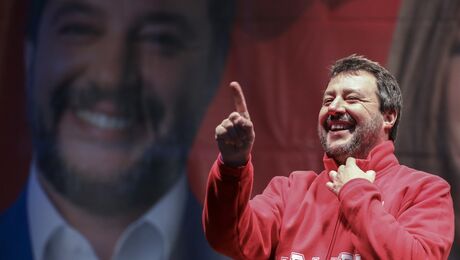 | | Salvini's bloc is aiming to take control of the left-wing stronghold of Emilia Romagna in Sunday's regional election. | | Photographer: Alessia Pierdomenico/Bloomberg | | | Global Headlines | | Trying times | House impeachment managers set out their case for removing President Donald Trump from office in the Senate trial by depicting him as vindictive, untruthful, unbound by the law and willing to abuse his power at the expense of U.S. national security. They will resume arguments today, seeking to persuade moderate Republicans that they should subpoena witnesses such as former National Security Adviser John Bolton. - Senators acting as jurors can drink either milk or water while in the chamber during the trial — and nothing else.
Global flashpoint | The eastern Mediterranean is a strategic but fraught region at the confluence of Europe, the Middle East and Africa. The delicate balance of power is being upset by President Recep Tayyip Erdogan's claims on rights over lucrative hydrocarbons following a contentious maritime deal struck with Libya. The jostling is evidence of a vacuum opening up as a result of U.S. disengagement, with Turkey and Russia attempting to take its place. 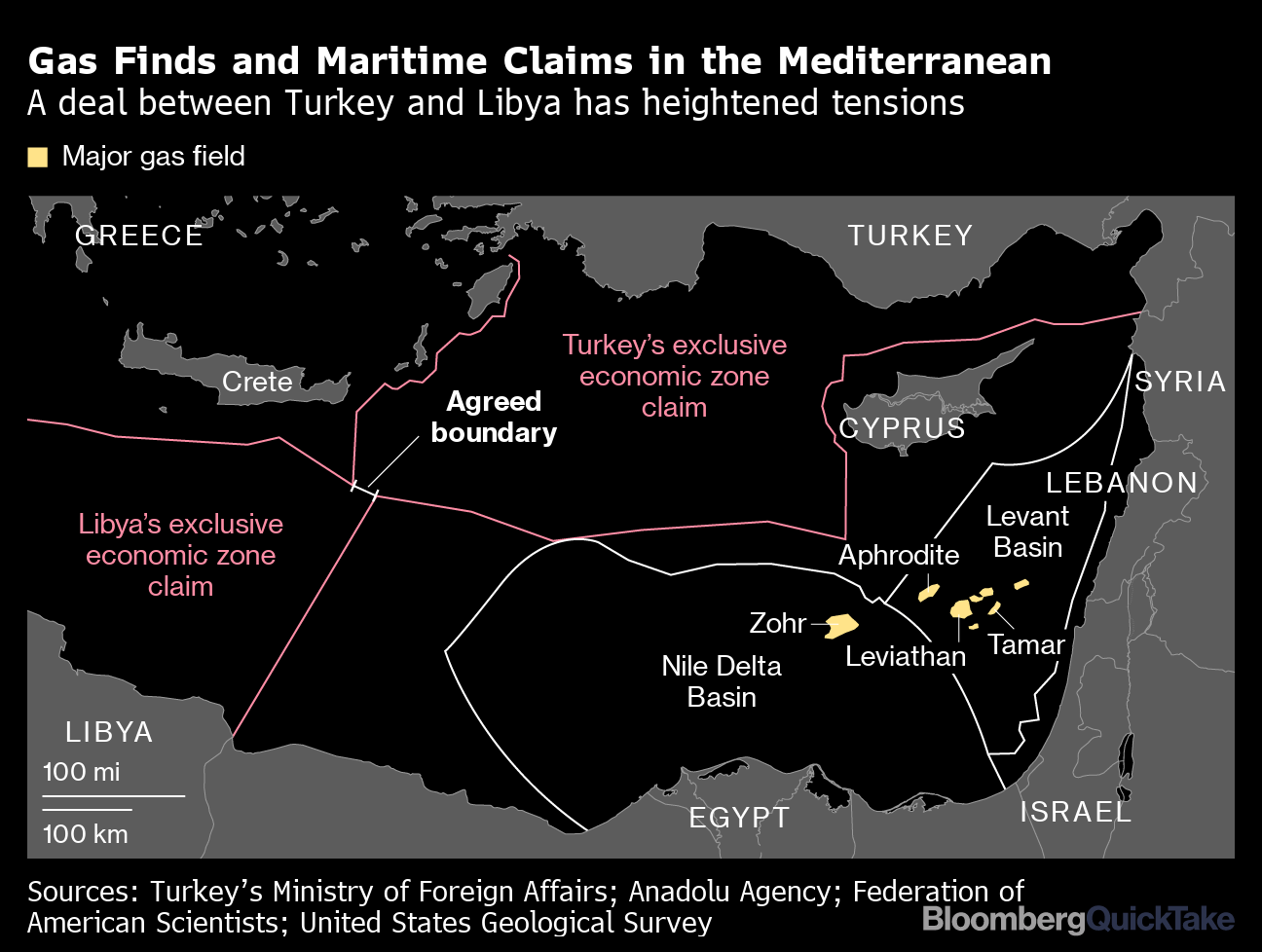 Moving on | Prime Minister Boris Johnson's Brexit deal cleared its final hurdles in parliament for the U.K. to leave the European Union on Jan. 31, ending a crisis that paralyzed politics for several years. Britain remains bound by EU law in 2020 while it negotiates a new trade deal with Europe. That's the "first priority," Chancellor of the Exchequer Sajid Javid told U.S. Treasury Secretary Steven Mnuchin yesterday. "I thought we'd go first," said a "disappointed" Mnuchin.
Damage done | The claim that Saudi Crown Prince Mohammed bin Salman was involved in hacking Amazon boss Jeff Bezos's phone refocuses attention on the young leader as he seeks a more positive global spotlight. Sylvia Westall and Donna Abu-Nasr report on potential damage to Saudi Arabia's image as it prepares to host dozens of events showcasing the prince's efforts to transform the kingdom's economy and lure billions in foreign investment.
China and Greta | China is conducting a "war against pollution," with some positive results. But unlike the rest of the world, where activism as exemplified by Greta Thunberg is a key driver of the environmental agenda, China frowns upon actions not involving the state. The result is a paradox: President Xi Jinping champions the anti-pollution cause, but restrictions on civil society leave little room for open criticism of government policy.
What to Watch - Trump will become the first sitting U.S. president tomorrow to address the anti-abortion March for Life in person as he courts conservative voters before the November elections.
- While Angela Merkel has little time to reset Germany's economy before her term ends, she appears more focused on challenges on Europe's doorstep such as Libya and Iran, subjects she'll probably emphasize when she speaks in Davos today.
- Chinese officials moved to halt travel from Wuhan, essentially locking down a city of 11 million people, as they try to stop the spread of a new SARS-like virus that's already killed 17 and infected hundreds.
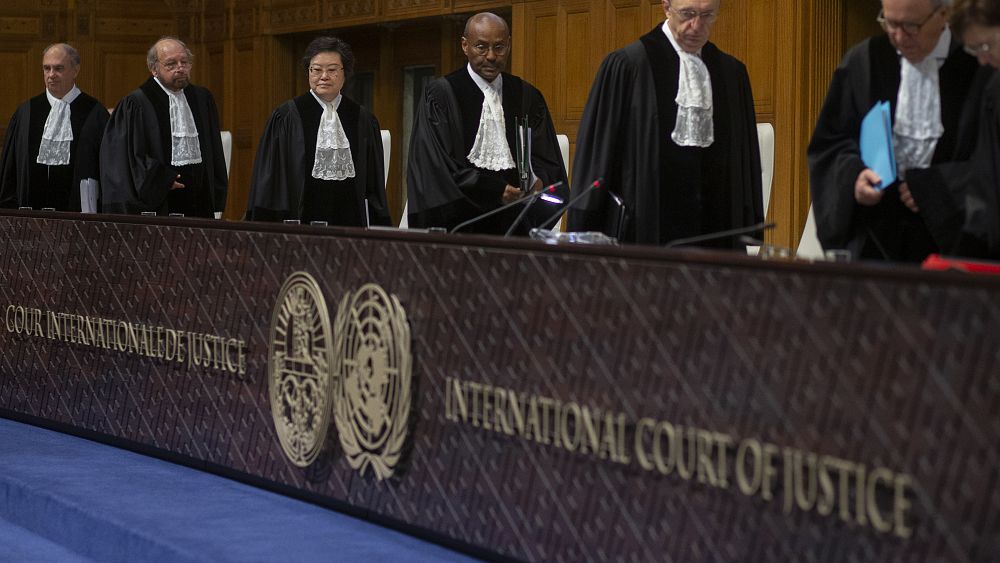
- The International Court of Justice ordered Myanmar to take emergency measures to prevent genocide against its minority Muslim Rohingya population.
Tell us how we're doing or what we're missing at balancepower@bloomberg.net. And sign up for Bloomberg Green, our new daily digest of climate news and insights on the latest in science, environmental impacts, zero-emission tech and green finance.
And finally … Thailand's ubiquitous street food vendors are wondering how they will cope with a new law that bans single-use plastic bags. While customers love buying cheap snacks and hot soup, Thailand generates more than 5,000 metric tons of plastic trash each day and some ends up spoiling its beautiful beaches. Authorities are clamping down on bags first, plastic straws by 2022 and aim to recycle all remaining plastic packaging by 2027. 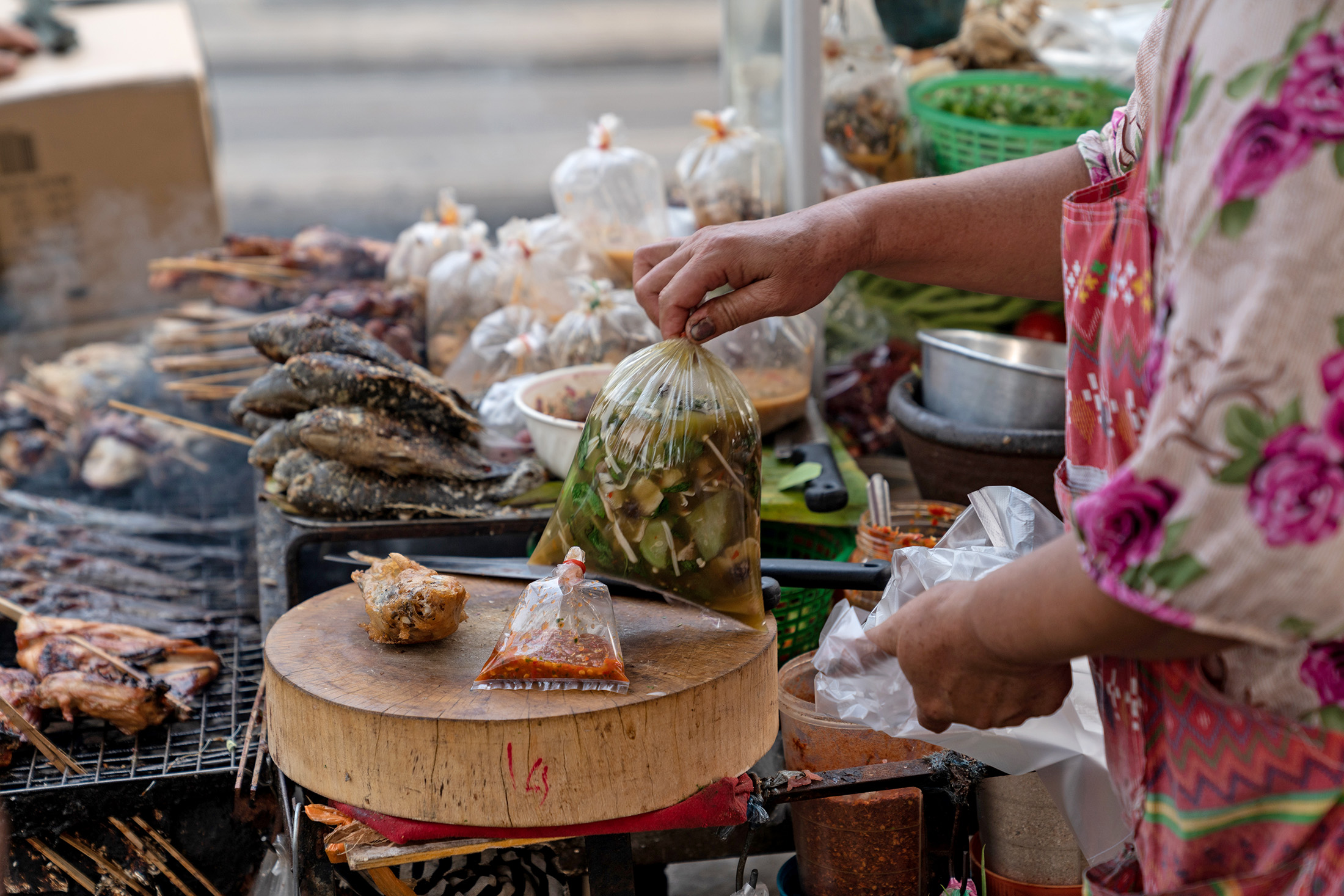 Take away order of soup is packed in a plastic bag at a street stall in Bangkok. Photographer: Nicolas Axelrod/Bloomberg Economics | | | | |   | | News Alert: Top U.N. court orders Myanmar to halt violence and prevent genocide against Rohingya Posted: 23 Jan 2020 02:02 AM PST These provisional measures from the Hague-based International Court of Justice was a win for efforts to protect the group against genocide that international observers say is still underway.                      | | الموقع الإلكتروني لجريدة المنتخب Posted: 22 Jan 2020 10:49 PM PST | |






































No comments:
Post a Comment