| As Kingmaker Gets Off the Fence, Gantz Gets a Boost (Makovsky | PolicyWatch 3279) Posted: 09 Mar 2020 03:27 PM PDT AS ISRAEL'S KINGMAKER GETS OFF THE FENCE, GANTZ GETS A BOOST by David Makovsky PolicyWatch 3277
March 9, 2020 Although Benny Gantz's party lost the head-to-head battle, Avigdor Liberman's favorable coalition math has left the general in a stronger position—and taken some diplomatic weight off the Trump administration's shoulders. READ THIS ITEM ON OUR WEBSITE
Israel’s third round of elections last week seemed inconclusive at first, but the deadlock may now be broken. Prime Minister Binyamin Netanyahu did better this time than in September’s round two, but his gains were insufficient to form a new government. Potential kingmaker Avigdor Liberman jettisoned his previous idea of getting the two top parties to join forces; instead, personal antipathy and policy differences have led him to definitely state that he will not join any government Netanyahu leads. Thus, while centrist Blue and White Party leader Benny Gantz may have options to shape a new government, Netanyahu has no pathway on his own. In theory, the center-left bloc has the requisite number of seats for a bare majority in the 120-member Knesset, since anti-Netanyahu forces won 62 seats. In reality, the situation is more complex. OPTION ONE: MINORITY GOVERNMENT The anti-Netanyahu forces include Blue-White (33 seats), the Arab-led Joint List (15), Labor-Meretz (7), and Liberman’s Yisrael Beitenu Party (7). The question is whether they can coalesce into a government without the Likud Party. The Joint List has refused to join past governments; moreover, no leading Israeli party has invited them, and Liberman pledged during the campaign that he would not even support tacit arrangements in which the list provides a safety net for Gantz in crucial parliamentary no-confidence votes. Will he stick to that stance now, or stand down and enable Gantz to form a temporary minority government in which the Joint List is an unofficial partner? If the latter, it would be the first minority government in Israel’s history to be sworn in from the start. After meeting with Liberman on March 9, Gantz announced that the two leaders would work together. They had exchanged public comments over the weekend about common goals for a new government related to the role of religion and state, suggesting behind-the-scenes coordination. Going forward, Gantz could take one of two approaches, neither of which sees a minority government as permanent. First, after he is sworn in, he could use the minority coalition as a springboard to a wider government. Once Netanyahu acknowledges that he has no path to form his own government, Gantz could recruit either Likud (led by someone other than Netanyahu) or its ultraorthodox allies, who hold 16 seats and may be willing to join in order to secure more government funding for their institutions. The latter option would require Liberman to abandon another pledge—that his secular party would halt the encroachment of ultraorthodox laws. Second, Gantz could use the threat of a minority government as a negotiating tactic to extract better terms from Netanyahu in configuring a national unity government with a rotating premiership. For his part, Netanyahu has begun to mobilize the public against a minority government in order to narrow Gantz’s options. Netanyahu has claimed that if Gantz tacitly coordinates with the Joint List, he will essentially be partnering with elements of that coalition who have supported or failed to rule out the use of Palestinian violence against Israel. At the center of this drama are two right-leaning parliamentarians from Blue-White, Zvi Hauser and Yoaz Hendel, who are known to resist a minority government and may therefore hold the balance of power within the bloc. The focus on a minority government is also bound to create a broader debate on the social and political role of Arab Israelis, who form 20% of the population. Polls show that young Arab Israelis want more integration, and Arab turnout shot up from 59% in September to 70% last week, reaching parity with Jewish turnout. Of course, this increase may have resulted from backlash to a provision in the Trump peace plan that proposes gerrymandering three Arab-majority communities northwest of the West Bank inside Israel for inclusion in a future Palestinian state, even though the area’s 100,000 residents want to remain part of Israel. OPTION TWO: UNITY GOVERNMENT The fight over who takes the first rotation as prime minister is the key to forming any unity government, since Gantz does not believe Netanyahu would honor any agreement to step down after two years. Within a few hours of polls closing, the incumbent claimed a “giant victory” as Likud bested Blue-White head-to-head, increasing its total by four seats while its rival gained none. As past elections have shown, however, what counts in the end is the ability to galvanize a big enough coalition, not win the individual party battle—this is likely why only one world leader (Austrian chancellor Sebastian Kurz) has congratulated Netanyahu on his ostensible win. If there is a unity government, Netanyahu could try to press for front-loading annexation of West Bank settlements in response to the Trump plan. Blue-White may in turn resist this approach. OPTION THREE: ANOTHER ELECTION Blue-White is now considering passage of a law that a premier cannot form a government if he is indicted. The law would likely be written to avoid charges of retroactive legislation and come into force with the next election. But its primary goal may be to deny Netanyahu the leverage of threatening a fourth election, perhaps making him more amenable to compromise. OTHER TAKEAWAYS Diving into the voting data yields several noteworthy observations about Israel’s current political dynamics, policy views, and campaign tactics: Turnout. Overall voter turnout continued to grow rather than diminish with each round: 71.3% last week vs. 69.8% in September. This may seem counterintuitive, but it is a testament to the public believing the stakes are high. Likud’s boost. Netanyahu’s party did much better in this round, adding 238,000 more votes since September at the expense of Liberman (who lost 47,000), the ultraorthodox party United Torah Judaism (which lost 36,000), the pro-settler party Yamina (which lost 20,000), and Otzma Yehudit (Jewish Power), which not only lost 64,000 votes but also failed to cross the 3.25% threshold required for entry into parliament. Netanyahu’s numbers received a particularly notable bump in areas near Gaza, which may suggest that his containment approach to that territory and the de facto truce with Hamas are popular among those voters. The Trump peace plan also seemed to help him on different levels. Politically, it diverted headlines from his ongoing corruption indictments and allowed him to tout his ability to shape international decisions in Israel’s favor. His pledges to declare Israeli sovereignty over West Bank settlements won him higher support from settler parties than ever before, with Likud’s numbers increasing as much as 10% in most major settlements compared to September. Blue-White gains despite itself. Gantz’s party ran a lackluster campaign but gained close to 69,000 votes. Notwithstanding his efforts to appeal to moderate right-wing Israelis, most of his extra votes came from other parts of the center-left bloc—the result of a funneling effect whereby people who previously voted for Labor or Meretz (which lost 138,000 votes) felt a need to stand with Blue-White against Netanyahu. United Torah Judaism. This is the first time in memory that the ultraorthodox party’s vote tally dropped, which is interesting given the very high birthrate among that community. Unlike in September, Likud bested United Torah even in Jerusalem. Does this mean ultraorthodox rabbis are losing their grip over their voters, or are such results just an aberration stemming from strong voter affinity for Netanyahu? U.S. POLICY IMPLICATIONS Netanyahu’s failure to garner a majority takes some of the pressure off the Trump administration, which was facing the prospect of having to give him the green light to frontload West Bank annexations in order to appease the factions that voted him back into office. Any moves of that sort would likely have sounded the death knell for the Trump plan, perhaps even triggering unrest in the West Bank and difficulties with the Israel-Jordan peace treaty. The parties can now defer such issues. Although there are indications that the White House is telling people some annexations might occur this year, multiple senior administration officials publicly insist that the Trump plan is not an ultimatum but rather an opening bid intended to elicit a Palestinian counterproposal. Many Palestinians seem to hope that the plan will be rescinded altogether if Trump is defeated in the next election, relieving them of having to decide whether to reassess their boycott of Washington and wholesale rejection of its latest peace proposals. David Makovsky is the Ziegler Distinguished Fellow at The Washington Institute and coauthor with Dennis Ross of the book Be Strong and of Good Courage: How Israel’s Most Important Leaders Shaped Its Destiny.
  |
| The Queen just showed huge support for Meghan Markle and Prince Harry amid their royal exit Posted: 09 Mar 2020 03:05 PM PDT  | Want More? We've Got You Covered | | Sign up for our newsletters to get the latest on your favorite celebrities and royals. | | | | | | |  | | Now Available | CBSN Originals: The War on Science Posted: 09 Mar 2020 02:32 PM PDT  | | CBSN Originals | As the government struggles to contain growing public concern about Coronavirus from spilling over into panic, it's faced with a potentially larger problem — trust in science.
More access to misinformation online is casting doubt on established science, making it more difficult for many to separate scientific fact from questionable ideas.
As social media posts and YouTube videos have increasingly cast doubt on science, surveys show a decline in the number of young Americans that believe in basic and long-established scientific facts and there are troubling signs that fringe ideas are making their way into classrooms.
In this episode of CBSN Originals, Adam Yamaguchi discovers pockets of America where politics, religion, social media and conspiracies drive a deepening suspicion of science. | | |   | | That’s just what we need right now, an oil war Posted: 09 Mar 2020 02:06 PM PDT Bloomberg Opinion Today Follow Us   | | This is Bloomberg Opinion Today, a matazeez of Bloomberg Opinion's opinions. Sign up here. Today's Agenda 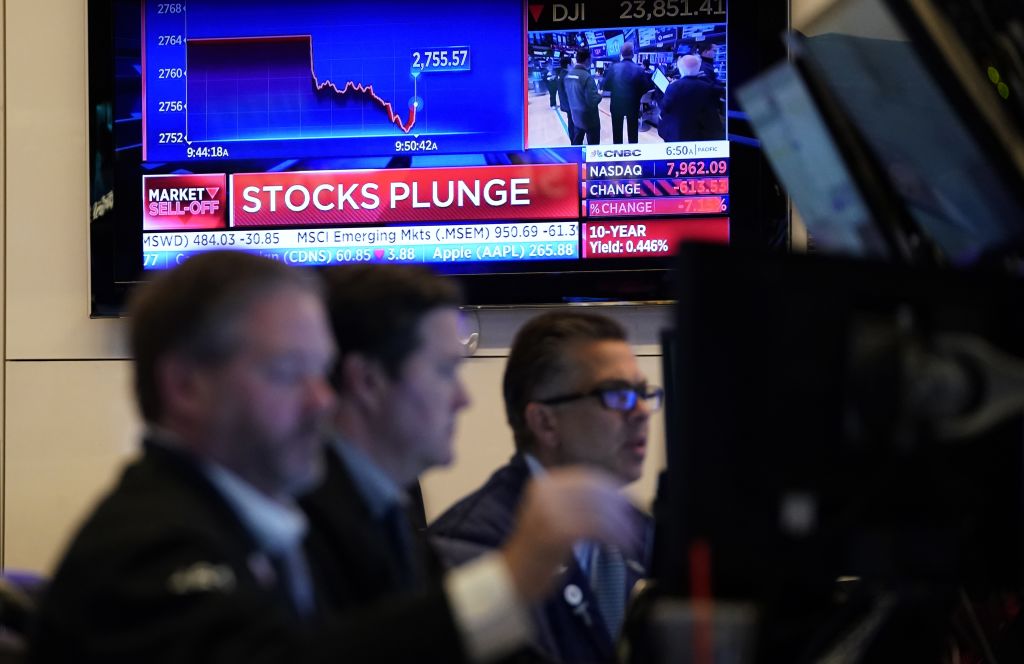 Another one of those days. Photographer: TIMOTHY A. CLARY/AFP/Gety Images One, Two, Three, Four, I Declare an Oil War As if the coronavirus weren't bad enough, now it's gone and started a war. Saudi Arabia and Russia, long bitter rivals in the crude trade, had become frenemies in recent years, teaming up to bolster sagging oil prices by cutting production. Then the coronavirus came along and took already-weak oil demand, tied it up in a sack with some rocks, and drowned it in the river. Saudi Arabia sought more production cuts in response, but Russia balked, and suddenly the "fr" was gone from their "frenemy" status. The Saudis said, fine, you want lower oil prices, you got 'em, and slashed prices dramatically to punish Russia, hoping to force it to play ball. Brent crude prices cratered this morning in response. But Saudi Arabia had better be prepared for a long slog, writes Julian Lee. Russia is kind of infamous for not being easy to push around, especially when directly challenged like this, writes Mohamed El-Erian. And Saudi Arabia has big disadvantages in this fight, including the fact that it needs high oil prices to finance its government and the operations of state-owned Saudi Aramco, David Fickling notes. A lot of Saudi investors cajoled into buying the Aramco IPO will soon be unhappy, writes Ellen Wald. On the plus side, dirt-cheap oil will provide desperately needed economic stimulus to China, one of Saudi Arabia's biggest customers, Ellen notes. It should also help out American drivers. But it will also lay waste to a whole bunch of American frackers, notes Liam Denning. That's a feature, not a bug, for the Saudis. Americans, starting with President Donald Trump, may feel differently. Further Saudi Reading: The price war coincided with arrests of two big-name princes, reminding investors of the Saudi government's opacity. — Bobby Ghosh Markets Peer Into the Abyss For financial markets already edgy over the coronavirus, the oil-price war was a soothing Monster energy drink. Stocks cratered so hard they triggered market circuit breakers, and interest rates fell to record lows. Cheap oil may be good for consumers, but that won't help much if they're sheltering in place in a nest made of hoarded toilet paper and Clorox wipes. Meanwhile, it's disaster for oil companies, with cascading financial side effects including the fracker bankruptcies mentioned above. As Matt Levine notes, markets are crashing for simple reasons this time, unlike during the financial crisis. But this can still trigger more-exotic threats too. Most importantly, oil's crash feeds the sense the entire world is becoming Japanified, with permanently negative interest rates and outright deflation, writes Brian Chappatta. For years, U.S. government bonds have yielded more than those of the rest of the world because America's economy has been stronger, and Corporate America's credit seemed rock-solid for the same reason. That's all in doubt now, and Treasury yields are collapsing toward zero. This is nothing less significant than the end of an era of American dominance of financial markets, writes John Authers. Until we figure out what new order will replace the old order, there will be turmoil. Further Market-Panic Reading: Coronavirus Panic: A Little Dab'll Do Ya Meanwhile, the virus continues to spread around the country, while panic about the virus spreads even more quickly. Often the vector for panic these days is social media, notes Alex Webb. That's where people post pictures of store shelves cleared of toilet paper and Clorox wipes, which makes people even more desperate to buy those things. But then there is a segment of our population aggressively not panicking about the virus, notes Faye Flam, further dividing an already polarized nation. Of course, just a smidgen of panic about this thing could help slow the spread of the disease, if it makes people more careful about washing their hands and not licking doorknobs. People who lived through the SARS epidemic in Hong Kong are still scarred by the experience, but the habits they developed then seem to help protect them from coronavirus, writes Nisha Gopalan. And being too blasé about the disease can lead to dumb behaviors such as breaking quarantines, which will be much easier to do in democracies such as the U.S. and Italy than in China, writes Ferdinando Giugliano. Freedom is not free. Further Life-During-Virus-Time Reading: Telltale Charts The U.S. is badly lagging other nations in testing for the coronavirus, writes Max Nisen. The numbers of cases will rise as that changes. 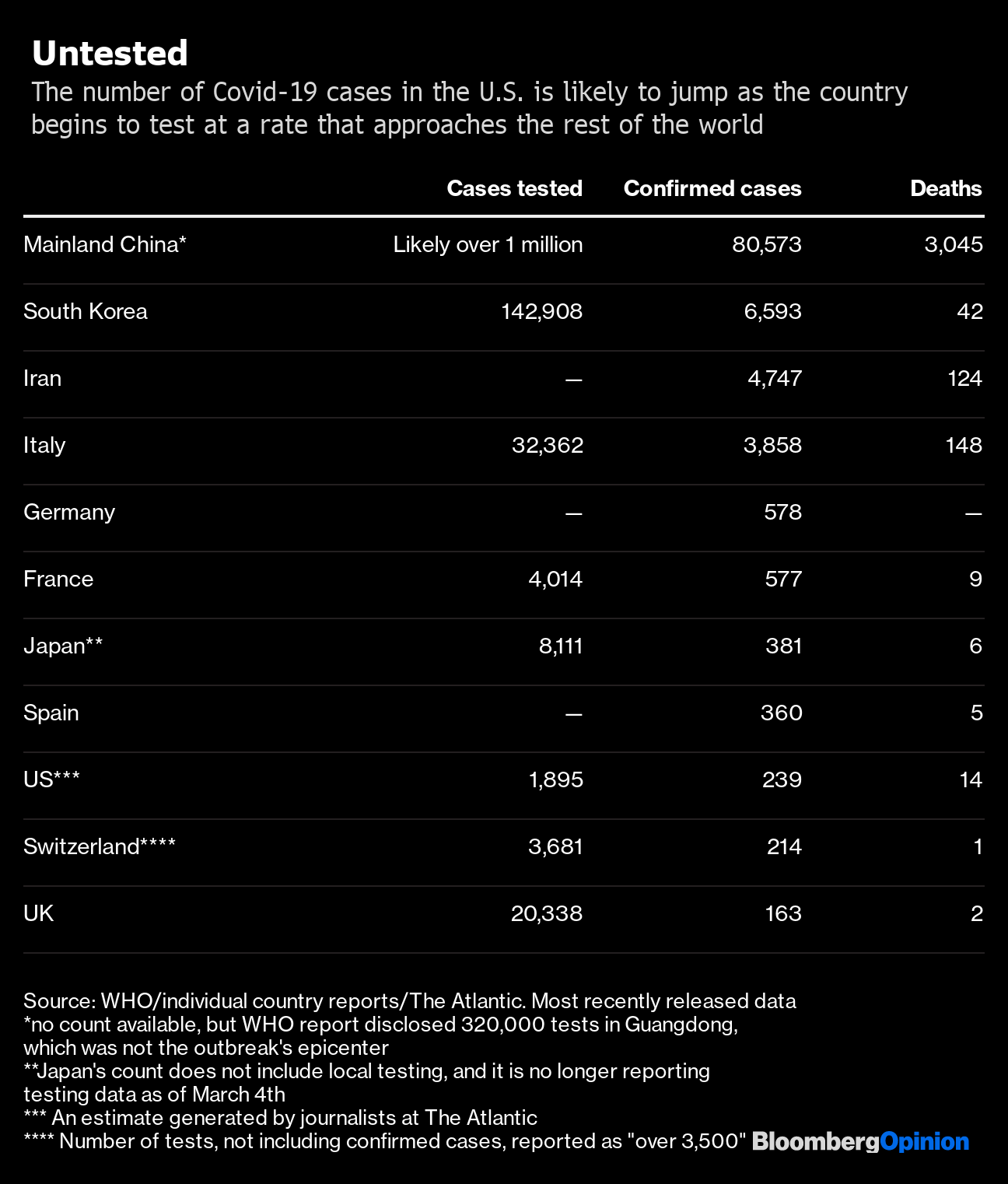 Airlines are practically giving away tickets for some flights these days, but it won't hurt their profitability much, writes David Fickling. 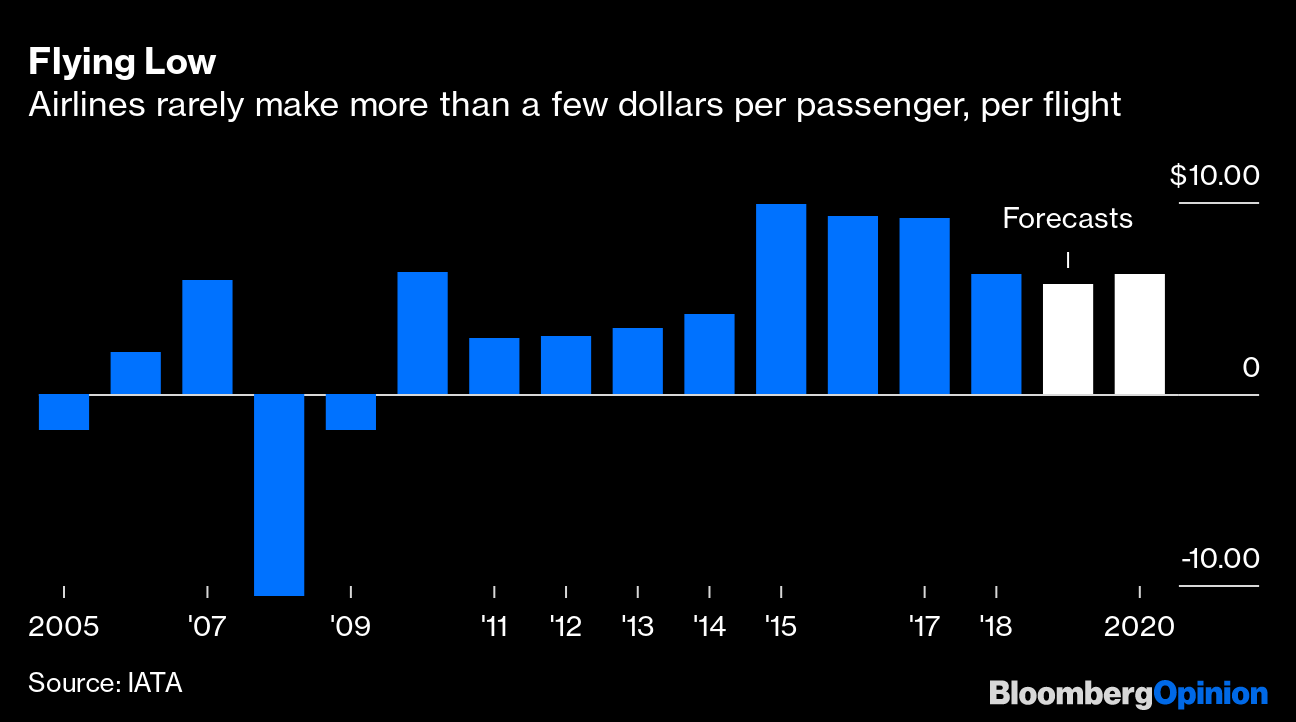 Further Reading India is botching its rescue of Yes Bank, planting the seeds of a financial crisis. — Andy Mukherjee Mick Mulvaney was possibly the worst White House chief of staff in history, and his replacement could be even worse. — Jonathan Bernstein Trump's decision to end OSHA company-shaming press releases could cost workers their lives. — Cass Sunstein Joan Didion's warning about the center not holding in the '60s is still relevant today. — Francis Wilkinson The ancient Greeks saw the world split between realists and idealists. It still is. — Andreas Kluth ICYMI Robinhood Markets went down again. Crashing markets reorder the ranks of the wealthiest. With all the hand-washing and sanitizing, you're gonna need a good moisturizing cream. Kickers Twitch streamers make money even when they're sleeping. (h/t Scott Kominers) Red wine flows from faucets and showerheads in Italy. (h/t Alexandra Ivanoff) South Korea is composting its way to sustainability. The human genome is full of viruses. Note: Please send compost and complaints to Mark Gongloff at mgongloff1@bloomberg.net. Sign up here and follow us on Twitter and Facebook. | | | | Before it's here, it's on the Bloomberg Terminal. Find out more about how the Terminal delivers information and analysis that financial professionals can't find anywhere else. Learn more. | | | |   | | Canadians should avoid cruise ships amid outbreak: officials Posted: 09 Mar 2020 02:05 PM PDT  The best foods to boost your immunity | | 🔔 As of this sending, Canada has 69 confirmed cases of COVID-19, and unfortunately, what appears to be the first death from the virus.
🛢 A confluence of global events led to a serious drop in oil prices Monday, and unfortunately, Alberta is getting the rough end of the deal.
👑 It's the last time you'll see Harry and Meghan as "senior royalty," so take a good look. Though if their outfits are any indication, they're not planning on getting out of the spotlight anytime soon. |
|
|
|
|
|
| | | | | | The update comes as Canada prepares to repatriate 237 Canadians aboard a cruise ship that’s expected to dock in California on Monday. |
| | Exacerbated by close quarters |
|
|
|
|
| | | When oil prices collapse, high-cost producers see their profit margins shrink the most, and Canadian oilsands operations have some of the highest production costs in the world. |
| |
|
|
|
| | | It was previously announced on the weekend that two elderly residents of a seniors care home in north Vancouver had been diagnosed with the virus. |
| | Community transmission a concern |
|
|
|
|
| | The legislation, dubbed Bill C-8, is targeted at individuals who are actively working and providing services proposing to change someone’s identity. |
| |
|
|
|
| | | | | | | | | | | | | | 👍 You're all set. Have a great day. |
|
|
|
|
|
| | | | |
|
 | | News Alert: Italy expands travel restrictions to entire country, locking down 60 million people in its fight against coronavirus Posted: 09 Mar 2020 01:54 PM PDT The decision, announced Monday night by Prime Minister Giuseppe Conte, comes just a day after Italy imposed similar restrictions on one-quarter of the country. The rapid acceleration shows that Italian policymakers have come to believe that hard-line measures are the best way to slow the virus's spread.                      | | Special Edition: Monday Meltdown Posted: 09 Mar 2020 01:17 PM PDT Evening Briefing | The global financial meltdown that struck more than a decade ago was followed by the longest market expansion in U.S. history. On Monday, spreading fear in the wake of Covid-19 and Saudi Arabia's decision to launch a price war conspired to deliver a calamitous day for stocks, starting with a 7% plunge and concomitant trading halt. While indexes run red, plunging oil prices could trigger a shift in the economic order. The bull finally looks like he's being pulled offstage, and we all know who is waiting in the wings. —David E. Rovella We're tracking the latest on the coronavirus outbreak and the global response. Sign up here for our daily newsletter on what you need to know. Here are today's top stories Goldman Sachs said it expects the Fed to slash interest rates as the U.S. economy stagnates. The bank also sees oil heading toward $20 a barrel. Congress is crafting legislation aimed at stemming the U.S. economic fallout. Markets haven't been mollified by President Donald Trump's "business-as-usual" strategy, which includes fundraising and golfing while blaming the media. This is how the new coronavirus can kill you. Patients with hypertension appear to be at a higher risk of dying from it, according to a top Chinese intensive care doctor. Governments across the globe are scrambling to beat it back as infections and deaths continue to climb. Target joined Kroger in limiting purchases of items like hand sanitizer and disinfecting wipes in response to U.S. consumer stockpiling. It was the Great Recession that taught airlines how to prepare for bad times. Now that Covid-19 is keeping people on the ground, the industry has built a fortress of cash to ride out the storm. What you'll need to know tomorrow What you'll want to see in Bloomberg Graphics Covid-19 cases have surpassed 110,000. In just one month, the outbreak spread from the Chinese city of Wuhan to 100 countries on every continent except Antarctica. Almost 4,000 people have died. In the U.S., the number of infected topped 500 with at least 21 dead, though test kit delays by the federal government have hamstrung state and local assessments of the pathogen's spread across the country. 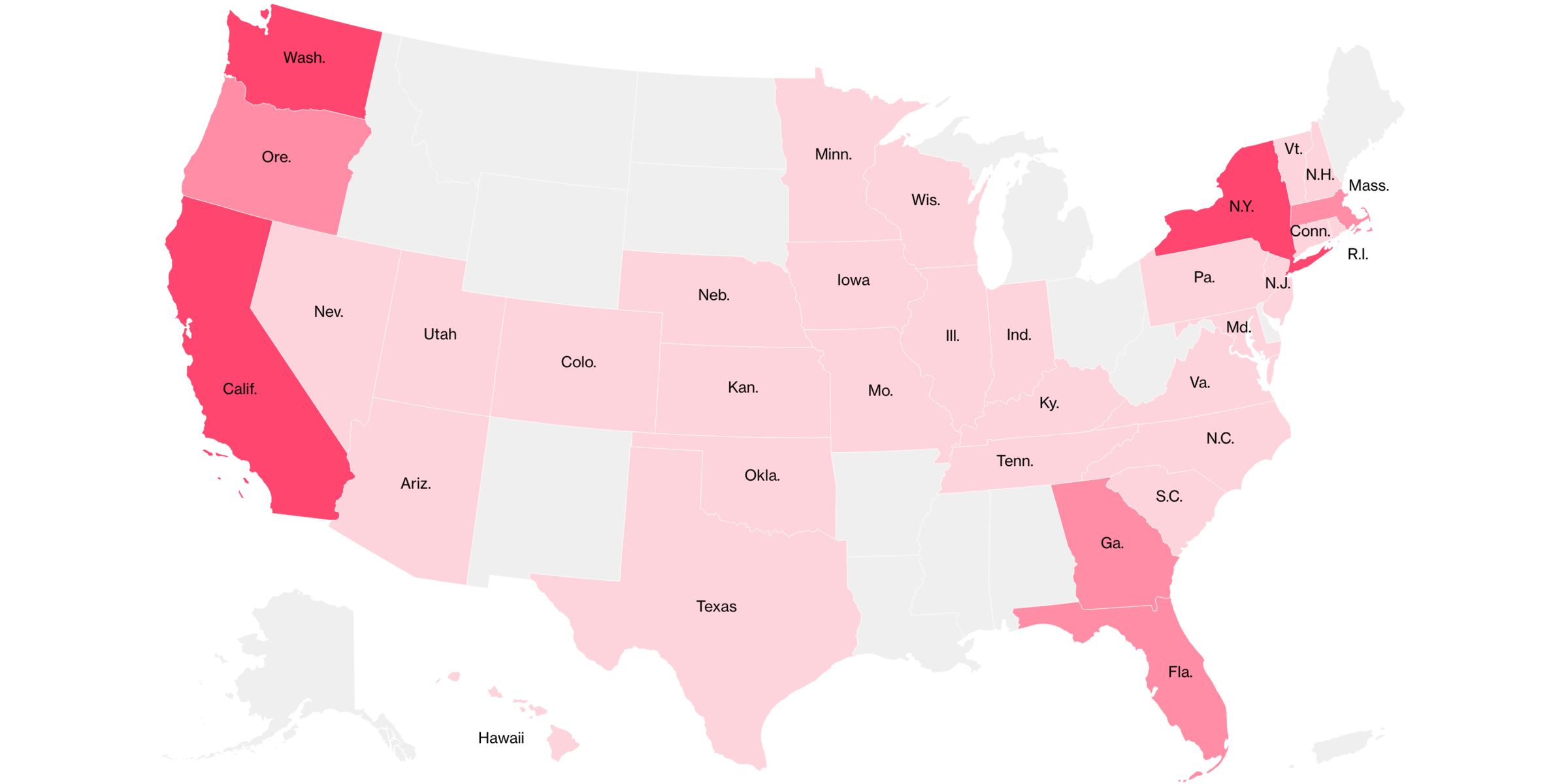
Like Bloomberg ' s Evening Briefing? Subscribe to Bloomberg All Access and get much, much more. You'll receive our unmatched global news coverage and two in-depth daily newsletters, The Bloomberg Open and The Bloomberg Close. The Coronavirus Daily is a new Bloomberg Prognosis newsletter about the global response to the Covid-19 outbreak by governments, businesses and individuals. Sign up to receive it in your mailbox every morning. Download the Bloomberg app: It's available for iOS and Android. Before it's here, it's on the Bloomberg Terminal. Find out more about how the Terminal delivers information and analysis that financial professionals can't find anywhere else. Learn more. | |   | | Meghan Markle and Prince Harry have an awkward family reunion with Prince William and Kate Middleton amid their royal exit Posted: 09 Mar 2020 01:16 PM PDT | If you are having trouble viewing this email click here |  | | 3/9/20 |  | | | |  | | | AWKWARD...
Prince William Says Brief Hello to Meghan Markle and Prince Harry While Kate Avoids Eye Contact | | | | "They are on different paths now," a source previously said of the two couples. "It's just the reality of the situation." | | | | |  | | | STAR TRACKS
Pregnant Katy Perry Hits the Stage in Australia, Plus JAY-Z & Blue Ivy, John Legend & Chrissy Teigen and More | | | | From Hollywood to New York and everywhere in between, see what your favorite stars are up to | | | | | | | | | | | | | HMM...
The Big Difference with Harry, Meghan, William and Kate at This Year's Commonwealth Day Service | | | | The outing marks the first time Meghan Markle and Prince Harry have publicly reunited with other members of the royal family since they announced they were stepping down from their roles | | | | | | | | |  | | | OPENING UP
Angelina Jolie Reveals in Powerful Essay that Two of Her Daughters Had Surgery | | | | The actress said her oldest, 15-year-old Zahara, has been "in and out of surgeries" for the last two months | | | | |  | | | ALL GROWN UP
Denise Richards and Charlie Sheen's Daughter Sam Is 16! See Her Mom's Birthday Tribute | | | | Exes Denise Richards and Charlie Sheen share daughters Sam, 16, and Lola Rose, 14 | | | | |  | | | CORONAVIRUS CRISIS
Family of Missouri Woman with Coronavirus Broke Quarantine to Attend School Dance | | | | The patient's father broke quarantine to bring his other daughter to a father-daughter school dance, prompting the school to cancel classes | | | | |  | | | CRIME NEWS
Gannon Stauch's Dad Files for Divorce from Stepmom After She's Accused of Killing Missing Boy | | | | Gannon Stauch's stepmom, Letecia Stauch, is accused of murdering him | | | | CLICK HERE FOR MORE NEWS | | | | | | | | | | Meredith Corporation, 1716 Locust Street, Des Moines, IA 50309
PEOPLE may receive compensation for some links to products and services in this email. Offers may be subject to change without notice.
Copyright © 2020 MEREDITH CORPORATION. All rights reserved. Reproduction in whole or in part without permission is prohibited.
| | |  | | BREAKING NEWS: Stocks plunge nearly 8% on coronavirus fears Posted: 09 Mar 2020 01:06 PM PDT Widening worries about coronavirus jolted investors Monday, sending the Dow Jones Industrial Average down nearly 8% — more than 2,000 points — after trading was temporarily halted in the morning due to the severity of the tumble. A sudden collapse in oil prices contributed to the market carnage as Saudi Arabia and Russia threatened to open their spigots rather than slash oil production. Read more here. To change your alert settings, please go to https://secure.politico.com/newsletter-settings

This email was sent to kamal.sahim5.news@blogger.com by: POLITICO, LLC 1000 Wilson Blvd. Arlington, VA, 22209, USA  Please click here and follow the steps to unsubscribe.
 | | The Coronavirus in Iran: Clerical Factors (Khalaji | PolicyWatch 3277) Posted: 09 Mar 2020 11:48 AM PDT THE CORONAVIRUS IN IRAN (PART 1): CLERICAL FACTORS by Mehdi Khalaji PolicyWatch 3277
March 9, 2020 The clergy's ambitions for global Shia revolution made the city of Qom uniquely vulnerable to the disease, and their resistance to modern medical science weakened the state's ability to combat its spread. READ THIS ITEM ON OUR WEBSITE
On February 19, two days before the Iranian government officially announced the arrival of coronavirus, an infected businessman who had recently returned from China to Qom passed away. The location and timing of his death illustrate how the Shia holy city and the religious leaders and institutions who call it home have played an outsize role in the disease’s disproportionately rapid spread inside Iran compared to other countries. How did this situation come to pass, and what does it say about the current state of the clerical establishment, its relationship with the regime, and its alienation from large swaths of Iranian society? FROM CRISIS TO CRISIS The epidemic hit Iran at the worst time and place. It emerged just after two major domestic crises—the gasoline protest movement that began in November, and the military’s downing of an airliner full of Iranian citizens in January—and just before the February parliamentary election. Moreover, ground zero was Qom, the ideological capital and spiritual center for Shia Muslims worldwide—including many potential disease carriers from China. In addition to fostering a general climate of instability, the lead-up crises made much of the Iranian public instantly suspicious toward the government’s statements, statistics, and containment strategies in reaction to the virus. From refusing to acknowledge the protestors it has killed (more than 1,500 according to Reuters), to denying responsibility for the airline disaster and treating the victims’ families badly, to displaying cold indifference about the historically low turnout for last month’s election, the regime has inadvertently instilled an even deeper level of mistrust among the people. This sentiment encompasses not only the leadership’s competence in times of crisis, but also its commitment to its legal duties and moral principles. One practical consequence of such mistrust is that citizens are now ignoring the recommendations issued by the political and religious establishment as much as they can, instead listening to their own instincts or consulting alternative sources. For instance, in Tehran and other cities, parents have refused to send their children back to class after the government decided to keep schools open. “HOLY HAVEN” BECOMES GROUND ZERO Iran’s virus outbreak began not in the capital or the centers of tourism, but in Qom, a city widely viewed as an unattractive place to move given its location in the middle of a desert and its rigid social environment. The city’s religious epithet—“the nest of the Prophet and his family”—was intended to reassure believers worldwide that it was insulated against epidemics and other disasters. Indeed, the Shia conviction of Qom’s immunity against catastrophe seems as firm as the wider Muslim faith in Mecca and Medina’s indestructibility. To be sure, Qom has been repeatedly ruined and evacuated over the centuries by both human conflicts and natural calamities. For example, the great famine of 1870-1872 led to a 30 percent decrease in its population. Yet its ability to survive and rebuild has only cemented its mythological image in believers’ minds—a conviction whose rigidity stems not so much from the devotion of individual worshippers, but from the complex web of theology, social institutions, financial resources/exchanges, and political power relations in which they live. And if early reports about the spread of the coronavirus prove correct, Qom’s status as the ideological capital of the Islamic Revolution helped make it the pathogen’s transmitting center to the rest of Iran and at least seven other countries. The dangerously irresponsible decisions that authorities have made about preventive measures in Qom provide a window into the regime’s religiously superstitious orientation. Both Supreme Leader Ali Khamenei and the clerical establishment he controls have opposed the medical recommendations given to them by the Ministry of Health, including calls for setting up quarantines in Qom. They tend to justify their resistance by touting the city’s divine immunity, even going so far as to encourage people to visit the local shrine of Fatima Masoumeh and pray for the sick to receive miraculous cures. When health officials pushed to quarantine the shrine itself, Mohammad Saidi—the site’s custodian and Khamenei’s top local clerical representative—joined other religious authorities in resisting the decision, causing significant delays in implementing much-needed precautionary measures. In addition to exacerbating the people’s feelings of panic and anger, such developments will surely widen the cultural divide between the religious establishment and Iran’s educated middle- and upper-middle-class urban populations. In recent years, the Shia clergy’s longstanding quarrel with the medical field has helped nurture a previously marginal trend: that of uncompromisingly rejecting modern medicine and promoting “Islamic medicine” as the true science inspired by divine knowledge. Regime officials have systematically promoted “Islamic medicine” in parallel to modern medical care, even though the phrase was coined not too long ago and lacks any deep historical tradition or legitimacy. The political aspect of the clergy’s opposition to quarantining Qom bears mentioning as well: namely, the notion that “the enemy’s hidden hands” were behind the cabinet’s emergency health recommendations. As Saidi reiterated in a February 22 speech, “No one allows the enemy to portray Qom as an unsafe city; defeating Qom is the dream of treacherous Trump and his domestic mercenaries, but this dream will not be realized even in their grave...Now it is clear that this malicious, dirty, and devilish man [Trump] has targeted Qom as the shrine of the Prophet’s family, the birthplace of Islamic Revolution, the haven for the world’s Shia...[and] the hometown for those who are brave, heroic, and faithful to the Supreme Leader. [Trump] wants to make coronavirus an excuse to culturally strike at Qom’s prestige.” CHINESE MUSLIMS AND SHIA GLOBALIZATION The current crisis highlights the stunning extent to which the Shia clergy and community have become globalized under the Islamic Republic. Such a process would not have occurred so quickly (if at all) without elements of the clergy ascending to political power and gaining access to the nation’s wealth. In the pre-revolutionary era, the clerical world was closed and calm—a trait that greatly curtailed the domestic and international travel patterns of individual religious figures, among other effects. But the revolution opened the door to an unrecognizably borderless space for the clergy, no less vast than the globe. Today, one of Qom’s wealthiest and most important institutions is al-Mustafa University, built and run by Khamenei with dozens of branches inside Iran and abroad. Its 40,000-plus students include many foreigners who are viewed not simply as religious pupils, but as missionaries in the regime’s ideological expeditionary force. According to Muhammad Hossein Bahreini, president of the Mashhad University of Medical Sciences, Iran’s high rate of coronavirus infection was at least partly attributable to the presence of 700 Chinese seminarians in Qom, suggesting that some may have been virus carriers. Predictably, clerical officials denied his claim immediately and ruled out the possibility of any connection between the virus and the city’s Chinese seminarians. Qom also hosts a considerable number of Chinese workers, probably many more than the clerical community. The government does not release reliable statistics about the many thousands of foreign nationals who reside in Iran, especially Qom, but the city’s Chinese residents are undoubtedly Muslim, if not Shia. Islamic sources claim that China has roughly forty million Muslims, approximately four million of them Shia (mainly Ismailis or Twelvers). The greatest concentration of them can be found in the eastern region of Xinjiang, which has a large Uyghur population. Many Chinese Muslims have long suffered from systematic suppression, persecution, discrimination, and even elimination by the Chinese state. Yet Iran and other major Muslim countries typically refuse to criticize Beijing in public for such massacres or offer their political support to victims, instead prioritizing their relationship with the government over pan-Islamist gestures. At the same time, Tehran has found other ways to cultivate influence among Chinese Muslims. In line with its general policy of exporting the revolution, these mechanisms include making religious investments in Muslim areas of China, building networks of Iran-friendly elites, and proselyting its brand of Shia Islam within the larger Chinese Muslim community. Unofficial reports indicate that the regime has also facilitated the entry of undocumented Chinese Muslims for the purpose of ideological training in Qom, with some of them returning to their homeland as regime-funded missionaries. But the Chinese presence in Qom goes well beyond residents. Around 2.5 million foreign tourists visit the city annually, including thousands of Chinese. Six years ago, Qom clerical centers began to teach the Chinese language, and such programs have since expanded to seminaries in Isfahan and other cities. The Imam Khomeini Education and Research Institute, headed by Ayatollah Muhammad Taqi Mesbah-Yazdi, is among the clerical entities that now admit Chinese students. IMPLICATIONS FOR U.S. POLICY In the immediate term, U.S. officials should use government radio and television organs, social media, public statements, and other outlets to disseminate accurate information about the coronavirus situation in Iran: for example, how the disease reached the country, how it spread from Qom to other cities, how many cases have emerged, and what the regime and clergy have done in response. They should also consider effective ways to counter the massive amounts of virus-related misinformation and disinformation being disseminated through various television networks and cyberspace, as both the regime and the opposition rapidly politicize the issue for contrary purposes. Yet they should avoid directly criticizing clerical institutions or further panicking the public, instead letting the facts speak for themselves. In the longer term, the crisis should help remind Washington that the clergy is completely beholden to Khamenei and, as such, should not be considered as an alternative channel for outreach or a potential independent actor if the Islamic Republic becomes destabilized. Since the revolution, the regime has steadily subjugated Iran’s clerical institutions, depriving them of their traditional autonomy and facilitating the demise of the deep-rooted multidimensional authority they held in the past. In return, they have seen exponential growth in their wealth, bureaucracy, and state functions. Their reliance on government funds and private businesses have made them less dependent on collecting religious taxes directly from the people—but also distanced them from society, exposed their intellectual poverty, and dissolved their past status as the exclusive medium for religious learning and community leadership. Mehdi Khalaji, a Qom-trained Shia theologian, is the Libitzky Family Fellow at The Washington Institute.
  | | World Alert: Israel announced that anyone entering the country from abroad will be quarantined for 14 days Posted: 09 Mar 2020 11:20 AM PDT Prime Minister Benjamin Netanyahu in a statement called the move a "tough decision ... that is essential to maintain public health." He said it would be valid for two weeks.                      | | فيروس كورونا: تابع آخر المستجدات لحظة بلحظة Posted: 09 Mar 2020 08:59 AM PDT فيروس كورونا يواصل الانتشار وعزل مناطق شاسعة في إيطاليا... | نسخة على الإنترنت | | نسختك الخاصة من أخبار يورونيوز – 03/09/20 |
|
| نشرتك اليومية من الأخبار المختلفة المتنوعة |
|
| يورونيوز، كل الحقوق محفوظة، Euronews SA, 56 quai Rambaud, 69002 Lyon, France |
|
| هذه الرسالة تصلك لأنك قمت بالتسجيل والاشتراك في النشرة الإخبارية ليورونيوز، إن لم ترغب في استلامها، يمكنك إلغاء الاشتراك بالنقر هنا |
|
| وفقا للقانون الفرنسي المتعلق بتكنولوجيا المعلومات وملف البيانات والحريات المدنية في 6 يناير 1978، لك الحق في أي وقت أن تدخل، تصادق، أو تحذف معلومات خاصة بك، يمكنك من خلال « الكتابة إلينا في قسم "contact" أو الاتصال ». |
|
|
|
 | | BREAKING NEWS: Steve Bullock enters Montana Senate race Posted: 09 Mar 2020 06:00 AM PDT Montana Gov. Steve Bullock launched his Senate campaign Monday, announcing with just hours to go until Monday's filing deadline that he would challenge GOP Sen. Steve Daines. Before and after running for president last year, Bullock insisted the Senate didn't interest him. But Democrats continued to recruit him into the race ahead of Monday's filing deadline, hoping that if he ran it would put Montana on the map and give them another opportunity to flip a seat in the uphill battle to win back the Senate. Read more here. To change your alert settings, please go to https://secure.politico.com/newsletter-settings
This email was sent to kamal.sahim5.news@blogger.com by: POLITICO, LLC 1000 Wilson Blvd. Arlington, VA, 22209, USA  Please click here and follow the steps to unsubscribe.
 | | The great financial freakout of March 2020 Posted: 09 Mar 2020 05:55 AM PDT Northern Italy is quarantined, another death in ICE custody, and farewell to one of the OGs of dog Instagram  THE BIG STORY
The US is still messing up its response, and Northern Italy is under quarantine
China responded to the coronavirus outbreak with a massive lockdown, restricting the movement of hundreds of millions of people. It seems to be working.
South Korea was less authoritarian but even more effective: they didn't lock down the country, but they did roll out a massive testing program. Hundreds of thousands of people have been tested, helping authorities track the outbreak with great precision. It also seems to be working.
The US has opted for a different path, of...not doing much? As of Friday, only about 2,200 people nationwide appear to have been tested, BuzzFeed News found when we contacted every health department in the country. Testing capacity was finally increased toward the end of last week, so this week we should see an increase in the number of people being tested — and testing positive.
That's already being reflected in the numbers, as you can see in our new live tracker page for the US outbreak. There have now been 566 confirmed cases in the US, up from just 101 a week ago.
Internationally, Italy took a dramatic step in an attempt to control the outbreak this weekend: it will quarantine the Northern region of Lombardy, home to 16 million people and the cities of Milan and Venice. People will not be able to enter or leave the quarantine zone without special authorization; museums, gyms and nightclubs will be temporarily closed.
We've launched a daily coronavirus newsletter that brings you everything you need to know about the outbreak. No panic, no fear mongering, just the facts. You can sign up here. For important information and updates, check the CDC's dedicated coronavirus site.
 STAYING ON TOP OF THIS
Stock markets are crashing around the world A few things happened over the weekend that led to financial markets having a freakout.
The biggest of them: Saudi Arabia launched an oil price war against Russia, causing the price of a barrel of crude oil to fall by more than 25% in a single day — the most since the beginning of the first Gulf War in 1991. Low oil prices can be good news for regular people, cutting the cost of a tank of gas. But they're bad news for the oil and gas industry, which employs hundreds of thousands of Americans and supports entire economies around the world.
And as discussed, the coronavirus continues to coronavirus.
So on Sunday, traders did all the things they do when they expect things are going to get really bad: They made huge bets that US stock prices would fall, and they moved their money into safe haven investments like US treasury bonds, which hit prices never seen before, ever. On Monday morning, stock markets around the world all absolutely tanked. The US market will almost certainly do the same when it opens for trading at 9:30.
SNAPSHOTS Bernie Sanders abandoned plans to give a speech on race at a town hall in Flint, Michigan this weekend. Sanders and his allies "decided it was probably better to let the people of color who were on the panel discuss instead," his spokesperson said.
An MSNBC guest referred to Meghan Markle as "five clicks up from trailer trash" live on air. The channel quickly ended the interview with Victoria Mather, who was identified as a Vanity Fair correspondent, but isn't.
A woman died in ICE custody on Sunday. The 22-year-old Guatemalan woman was the eighth detainee to die since October 1.
Elizabeth Warren was a guest on Saturday Night Live this weekend. Days after ending her presidential campaign, she joked she's been winding down by "prank-calling banks, drag-racing Subarus, avoiding Twitter."
FOR A CHANGE OF PACE Take a trip to Selma, Alabama
This weekend marked the 55th anniversary of the first Selma to Montgomery march, when civil rights demonstrators were brutalized by Alabama state police as they attempted to march peacefully to the state capital. Images of the violent police response were transmitted worldwide; it was a turning point for the civil rights movement.
Today, the Old Depot Museum in downtown Selma preserves the city's long, complicated history. Gabriel Sanchez spoke with the museum's curator, Beth Spivey, and put together a beautiful photo essay on the town, the museum and its artifacts. If you're looking for a change from *gestures wildly* all this, check it out.
Ty Wright for BuzzFeed News RIP, MARNIE Marnie, one of the OG dogs of Instagram, has died. She was 18. Marnie was adopted from a shelter in Connecticut when she was 11. She was blind in one eye, she had a head that was at a permanent tilt to the left and a tongue that was always hanging out. And she became an Instagram celebrity.
"I'm grateful to the universe for entrusting me with her beautiful soul and providing me with the perfect best friend and companion," wrote Marnie's human, Shirley. "When I hear from people that Marnie has made them adopt their senior dogs it's truly the most beautiful legacy she and I could hope to leave in this world."
You are absolutely going to outperform the S&P 500 today,
Tom BuzzFeed, Inc.
111 E. 18th St.
New York, NY 10003
Unsubscribe |  | | Monday Morning Briefing: Italy locks down millions as its coronavirus deaths jump Posted: 09 Mar 2020 05:47 AM PDT |  | | | | | | | | | CORONAVIRUS | | | | | | Markets double-whammy
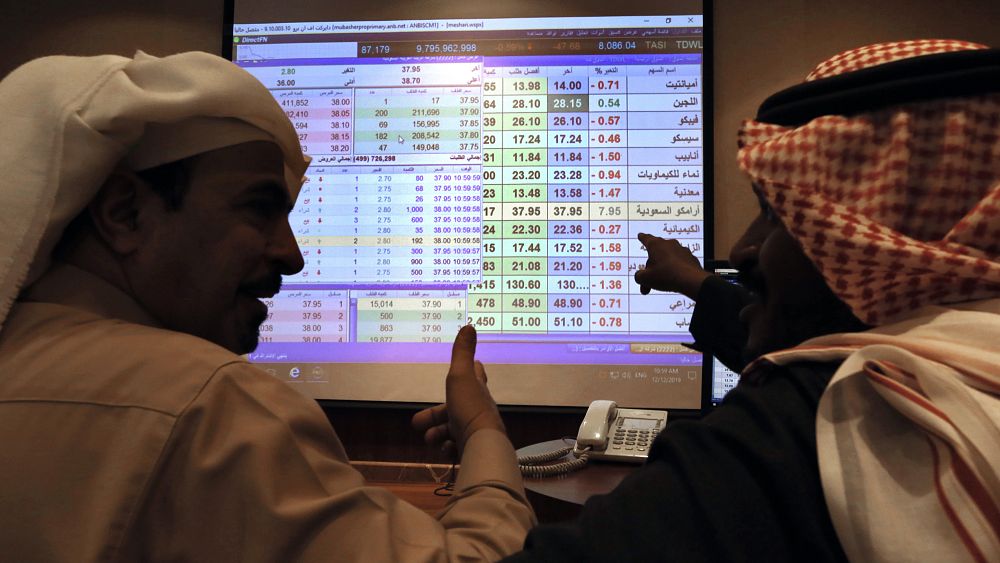
Financial markets are already struggling to understand what the coronavirus outbreak means for asset prices - now add to that the new trading turmoil after Saudi Arabia slashed oil prices and set plans for a dramatic rise in crude production. European shares this morning slumped as fears of a global recession were amplified by a 25% plunge in oil prices. Panicked investors bought bonds and the yen, which are deemed as safer assets to own right now.
“Wild is an understatement,” said Chris Brankin, chief executive at stockbroker TD Ameritrade Singapore. “Across the globe you would have every broker/dealer raising their margin requirements ... trying to basically protect our clients from trying to leverage too much risk or guess where the bottom is.”
The spread in figures
The number of people infected with the coronavirus topped 107,000 globally, according to a Reuters tally of government announcements. Mainland China, outside the epicenter of Hubei province, reported no new locally transmitted cases for the second straight day. That said, this is the second-highest number of daily reported cases since the disease began, with almost 99% of new cases reported now outside of China.
The death toll outside of China also shot up to 704 from 129 a week earlier. Almost 80 percent of those deaths are from Iran and Italy. In the past 24 hours Italy reported 133 deaths, roughly the same amount as China’s combined toll over the past 5 days
The number of confirmed U.S. cases of coronavirus reached nearly 550 on Sunday, including 22 deaths. Older Americans, especially those with chronic medical concerns, are being advised to think twice about attending big social gatherings and going on airline flights.
Sports without spectators
The latest sporting event to be held without fans in attendance will be the Bahrain Formula One Grand Prix on March 22. Bahrain itself has reported 83 cases of the virus, mostly linked to people who had traveled to Iran.
“Convening a major sporting event, which is open to the public and allows thousands of international travelers and local fans to interact in close proximity, would not be the right thing to do at the present time,” the organizer said.
| | | | | | | | | | | | | | | | | | | Top Stories on Reuters TV | | | | | | | |  | | Networks Trying to BAN Bill O'Reilly's money message Posted: 09 Mar 2020 05:33 AM PDT  The following is a message from one of our advertisers. This message does not represent the opinion of The Washington Times. Dear Reader, You better watch this Bill O'Reilly's money message before it's too late. /oreillyalex.png)
One network flat out told us they refuse to run it because of its "conservative nature." Wouldn't you agree – that's a direct violation of freedom of speech? What we fear now is that other networks might piggyback on this ban…
I urge you to watch it closely… and take notes. You'll discover the truth about the economy… and what it takes to dramatically build your wealth in the current markets. Regards, George Rayburn Executive Vice President, The Oxford Club P.S. You can see how to claim O'Reilly's newest book that just sold 100k copies in its first six days.  If you don't want to receive these emails, unsubscribe.
3600 New York Avenue NE Washington, DC 20002.   | | World Alert: Afghan presidential inauguration cut short by explosions, sending attendees scrambling for safety Posted: 09 Mar 2020 05:27 AM PDT The attack occurred as Afghan President Ashraf Ghani was delivering remarks in Kabul after taking the oath of office. Ghani escaped unhurt, and initial reports described the blasts as mortar attacks that inflicted only minor damage and few casualties.                      | | Confirmed coronavirus may force Americans to avoid crowds and cancel cruises; U.S. cases near 550 Posted: 09 Mar 2020 05:02 AM PDT Reuters.com Newsletter |  |  | | | | | | | | | | Older Americans, especially those with chronic medical concerns, should probably avoid big social gatherings and airline flights, given the rapid spread of coronavirus, a top U.S. health official said on Sunday, as investors braced for another volatile week in financial markets. | | | | | | The number of people infected with coronavirus topped 110,000 across the world as the outbreak reached more countries and caused more economic damage. | | | | | | An ocean liner barred from returning to port in San Francisco due to a coronavirus outbreak on board will dock briefly at a nearby terminal in Oakland, where passengers will be unloaded and sent on to medical and quarantine sites elsewhere, officials said on Sunday. | | | | | | Two U.S. Republican lawmakers, Senator Ted Cruz and Rep. Paul Gosar, said on Sunday they will quarantine themselves after contact at a late February gathering of conservatives with someone who has since tested positive for coronavirus. | | | | | | The Indian Wells tennis tournament, the most prestigious event outside the Grand Slams and tour finals, was canceled on Sunday, over concerns about the spread of a coronavirus in Southern California. | | | | | | Democratic presidential contender Joe Biden will focus campaign efforts on Monday on Michigan, the biggest prize of the six states to hold contests this week, where a win could give him an insurmountable lead. | | | | | | Canada has secured a plane to repatriate its citizens onboard the Grand Princess cruise ship that is due to dock in California after cases of the new coronavirus were discovered on the vessel, the Canadian government said in a statement on Sunday. | | | | | | President Donald Trump loves numbers, and the ones he believes illustrate his accomplishments - an unemployment rate at a 50-year-low and stock markets at record highs - have become touchstones in his speeches, rallies and Twitter missives. | | | | | | NASA's Ames Research Center in California said late on Sunday it would make its employees work from home until further notice after one tested positive for coronavirus. | | | | | | Twitter Inc on Sunday used its new "manipulated media" label for the first time on a video clip of U.S. Democratic presidential candidate Joe Biden that was retweeted by President Donald Trump. | | | | | | | | | | | |  | | We’re about to find out how bad things really are Posted: 09 Mar 2020 04:46 AM PDT Coronavirus Daily | Welcome to the first edition of Bloomberg's new daily coronavirus newsletter for the latest on the Covid-19 outbreak and its impact around the world. You're receiving this introductory newsletter because you're an active Bloomberg subscriber and we thought you might be interested in reading this new daily briefing. To keep getting the latest virus news in your inbox after today, sign up here. Good morning, everyone. Here's the latest top news on the virus: - Cases top 109,000 worldwide; deaths exceed 3,800.
- Stocks worldwide plunged as oil fell 30%. U.S. yields hit new lows.
- France called for Europe-wide fiscal stimulus; the U.S. is preparing measures to support the economy.
| | This week, countries with early-stage coronavirus clusters are going to start finding out whether they're Italy, or whether they're Singapore. Early on, Singapore seemed like it could succumb to an outbreak because of its close geographic and economic ties to China. But it's totaled only 150 cases since a first patient emerged in mid-January. In Italy, there were only 17 identified cases less than three weeks ago. Now, there are more than 7,000, with at least 350 people dead. Movement has been restricted around Milan, Venice and other northern cities. There are concerns about hospitals being strained beyond capacity. The two countries offer contrasting case studies. Italy showed what can happen when an outbreak goes undetected. Singapore's decisive measures proved that aggressive testing, tracking and quarantine can halt the virus. The U.S. isn't Singapore. A weeks-long failure to test and isolate patients and their contacts means that opportunity has likely passed. There are too many cases emerging without ties to other ones and experts believe the disease is circulating freely in some places. The question is whether America will look like Italy, or something else. Two weeks ago, the U.S. Centers for Disease Control and Prevention warned that Americans should be ready to experience disruptions in their daily lives. With markets in panic, and a public-health response that's seemed behind the ball, that's looking more likely by the day. U.S. testing for new cases is expected to rapidly grow this week, and so too will the number of confirmed patients. Those numbers will likely determine the reaction by state and local governments. New York has already urged people who might be vulnerable to commute on off hours, and walk or bike to avoid the subway. The CDC has told people with underlying health conditions to stock up on necessary supplies like prescription medicines. Fighting epidemics, or stopping them from spreading, has a cost. When we're ahead of them, we have relatively cheap, non-disruptive tools—like vaccines. When we're behind them, economy-rattling quarantines, movement restrictions and health-system strain become more likely—not to mention more infections, and more people seriously ill or dead.
The market selloff speaks to a gnawing sense that policy makers are falling further and further behind the virus. This week, the world is going to start finding out just how bad things really are.—Drew Armstrong | 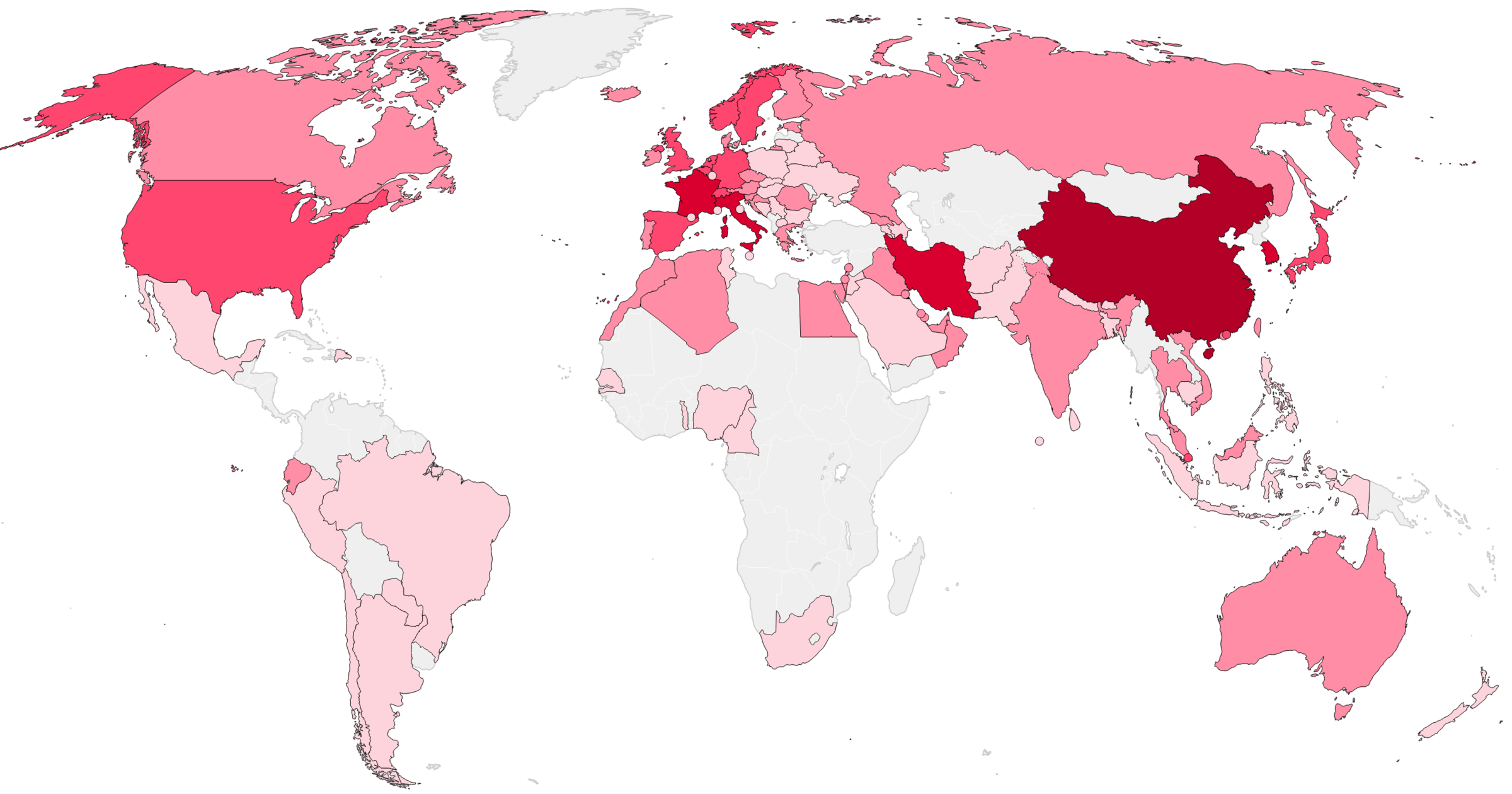 Photographer: Bloomberg Graphics Photographer: Bloomberg Graphics See the latest counts globally as health authorities around the world remain on high alert. | | Know someone else who would like this newsletter? Have them sign up here.
Have any tips on covid-19 news? Get in touch.
Like this newsletter? Subscribe for unlimited access to trusted, data-based journalism in 120 countries around the world and gain expert analysis from exclusive daily newsletters, The Bloomberg Open and The Bloomberg Close. | | Follow Us | |   | | Journal numérique - Mardi 10 mars 2020 Posted: 09 Mar 2020 04:41 AM PDT  | | | | | Dès 13 heures, feuilletez votre journal numérique à l'écran et parcourez les grands titres de l'édition du jour. | | | | | | |  | | Problems upon problems Posted: 09 Mar 2020 03:43 AM PDT Balance of Power | | From  | | | | | Another big challenge just landed on the plates of policy-makers and leaders around the globe. Already grappling with risks to their economies from the spreading coronavirus, cratering oil prices are infecting markets everywhere. Brent crude dropped by almost a third to $31 a barrel at one point today — the second-largest decline on record — after the breakdown in talks between OPEC and Russia on managing global supply saw Saudi Arabia kick off a price war. Some stock indexes entered bear markets. Treasury yields tumbled, with the entire curve trading below 1% for the first time in history. Markets are expecting the Federal Reserve to cut policy rates to 0% in the coming months. If oil stays low it'll eventually eat through national budgets from Venezuela to Nigeria and Iran. Russia's Vladimir Putin meanwhile has fired a shot across the bow of America's shale revolution, with President Donald Trump's repeated touting of U.S. energy self-sufficiency. Cheap oil is in theory good for governments that bear a fiscal burden from fuel subsidies. And for big countries like China and India that rely on imports to grease their economies. Though less so for China if it also sees demand falter for its refined products. The double punch from the virus and oil means policy coordination is ever more important, with a role for the global institutions that Trump has voraciously and frequently criticized. But so far leaders have struggled on that front. The arguing between big countries over crude supply could prove another constraint to keeping those lines of communication open. And in the end, global financial instability isn't good for any economy — nor potentially for the staying power of some leaders. — Rosalind Mathieson | 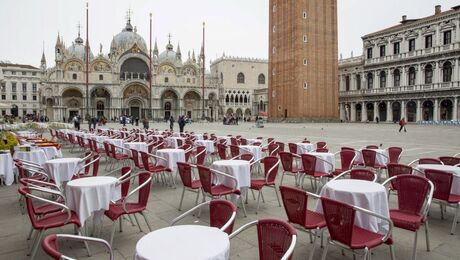 | | Empty tables outside a restaurant in Venice on March 5. | | Photographer: Bloomberg/Bloomberg | | | Global Headlines | | Shutting down | China found it hard enough to quarantine a significant slice of its population due to the coronavirus outbreak, and it's a one-party state with an iron-fisted grip on power. Italy's efforts to lock down its industrial northern heartland (a region with around 16 million people) have been shambolic, adding to doubts over Prime Minister Giuseppe Conte's already-tenuous hold on power.
Bracing for impact | The Trump administration is drafting measures — including a temporary expansion of paid sick leave and possible help for companies facing disruption — to blunt the economic fallout from the virus and help slow its spread, Saleha Mohsin and Jennifer Jacobs report. - Two Republican members of Congress will self-quarantine after contact with a person who later tested positive for the virus.
Climate of fear | Saudi Crown Prince Mohammed bin Salman's dramatic actions — arresting close members of his own family and slashing crude prices in a bid to take on Russia — underscore the de-facto ruler's own concerns about his grip on power. His actions suggest he's not going to let anything get in his way, Sylvia Westall and Donna Abu-Nasr report.
Cementing his advantage | Joe Biden is poised to amass an insurmountable delegate lead by mid-March, leaving Bernie Sanders with little power to stop him from becoming the 2020 Democratic presidential nominee. As Gregory Korte writes, Biden's well-placed to extend his advantage in nominating contests tomorrow and in some or all of the four states that vote a week later.
- Coming up: Michigan, Missouri, Washington, Mississippi, Idaho and North Dakota vote tomorrow. Candidates debate March 15 in Arizona ahead of that state's March 17 primary.
Johnson's curse | British Prime Minister Boris Johnson has been trying to deliver his first budget since November, but it's been repeatedly derailed. As Tim Ross reports, first the Brexit turmoil and a snap election forced him to cancel it, then his finance minister quit and now the coronavirus is prompting yet another rewrite ahead of Wednesday's announcement.
What to Watch This Week
- Turkish President Recep Tayyip Erdogan meets European Union leaders in Brussels today over the burgeoning refugee crisis, while Greek Prime Minister Kyriakos Mitsotakis visits Berlin for talks with Chancellor Angela Merkel.
- Betsy Duke, who took control of Wells Fargo's board two years ago as part of the bank's efforts to clean up a flurry of scandals, is facing calls to step down ahead of dramatic congressional hearings this week.
- Official results in Israel's third election in a year are due tomorrow, amid reports Prime Minister Benjamin Netanyahu fell short of a parliamentary majority.
- Putin's constitutional changes, including amendments that mention God and stipulate that marriage is a union of a man and woman, come before parliament this week.
- Three Russian nationals and one Ukrainian will stand trial in the Netherlands for their alleged role in the 2014 downing of Malaysia Airlines Flight 17.
- Guyana's opposition is seeking an injunction to declare this month's presidential election invalid, after more violence in the small South American country saw police shoot dead a protester.
Thanks to all who responded to our pop quiz Friday and congratulations to reader Sonia Leonard, who was the first to name Burundi as the African country where a commission is exhuming mass graves from post-independence turmoil. Tell us how we're doing or what we're missing at balancepower@bloomberg.net.
And finally ... If Ukrainian President Volodymyr Zelenskiy thought he could breathe easy when Trump's impeachment ended in an acquittal, he was wrong. First a cabinet revamp annoyed voters and spooked investors. Now Biden's comeback on Super Tuesday has put the Republican spotlight back on the former vice president's dealings with Kyiv. Silence has worked well for Zelenskiy in the past, but this time staying out of the fray may be harder.
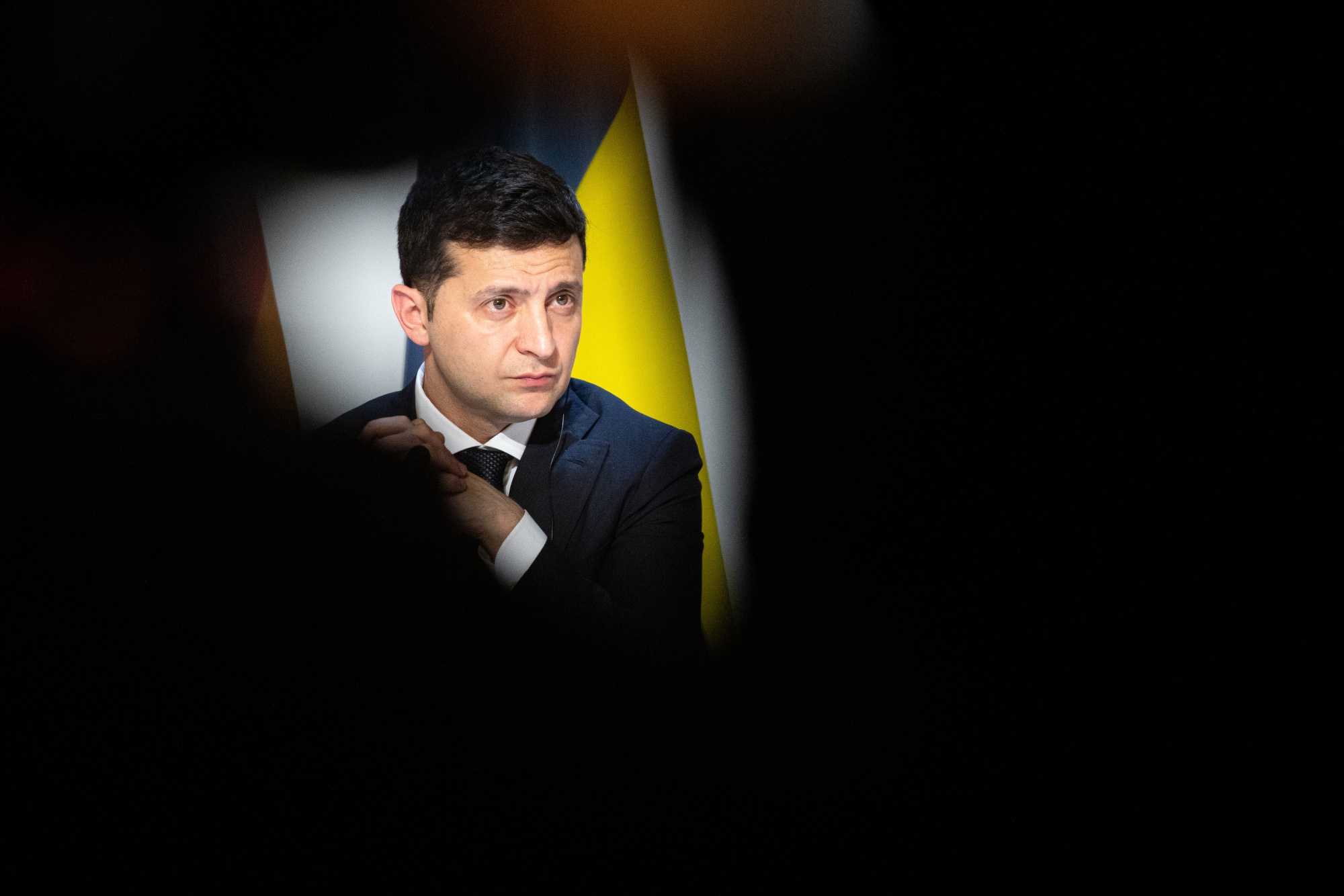 Zelenskiy at a news conference after a summit on Ukraine in Paris in December. Photographer: Christophe Morin/Bloomberg | | | | |   | | World Alert: Panic grips global financial markets as oil-price war and coronavirus rattle investors Posted: 09 Mar 2020 01:31 AM PDT U.S. stock futures plunged on Monday, Treasury yields hit record lows and oil prices collapsed as fallout from the coronavirus epidemic sent shudders through the world economy. European and Asian markets were sharply lower, responding to worries over a Saudi-led oil glut.                      | |

















/button_youve-got-to-see-this-message-from-bill-oreilly.png)
















No comments:
Post a Comment